
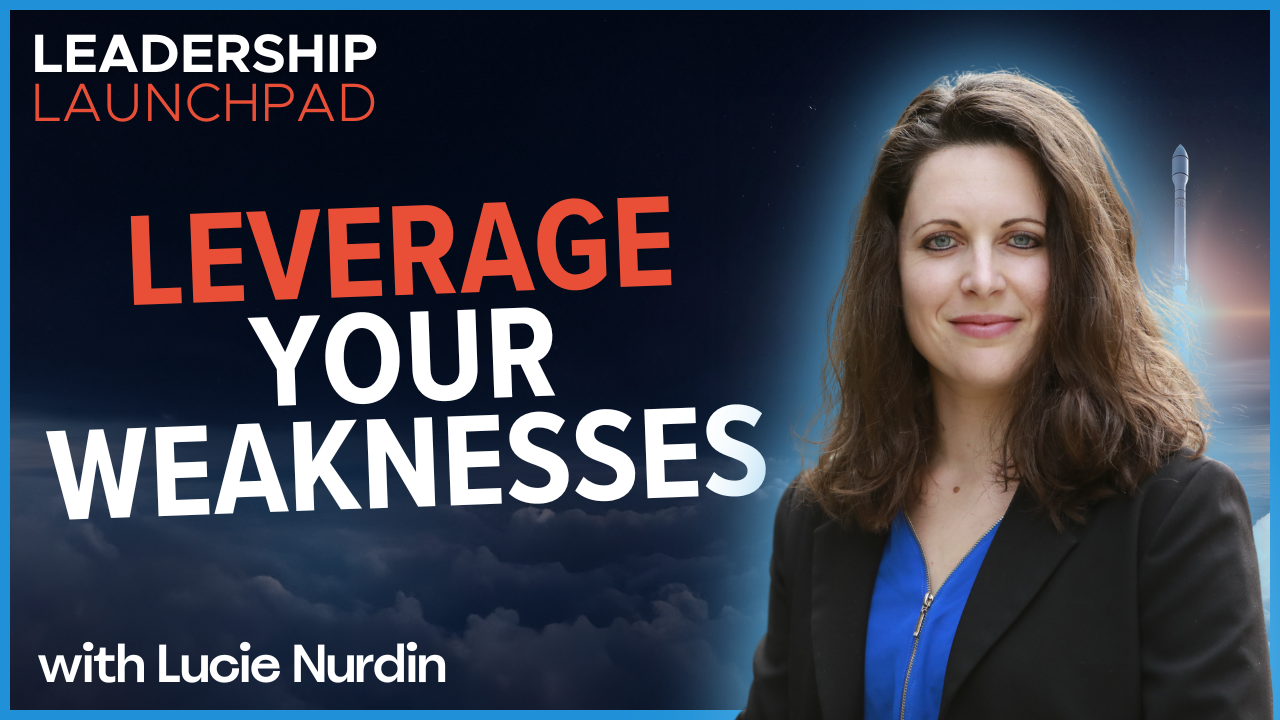
In this episode, Lucie Nurdin, a chemical engineer and former interim technical director at Terraform Industries, shares her journey transitioning from academia to the startup world and from individual contributor to manager. She discusses the technical challenges of developing economically viable synthetic fuels from CO2 and sunlight, and reflects on her experiences leading and growing a technical team. Lucie Nurdin talks about building trust, effective delegation, fostering team communication, and the importance of empowering people by leveraging both their strengths and weaknesses. She also offers insight on how to create a collaborative and feedback-driven work environment, drawing on lessons learned from both academic research and her leadership role in industry.
 Automated Transcription
Lucie Nurdin [00:00:00]:
Understanding what on my end I could delegate to on my team, knowing whether they would be successful or not and being able to pivot or change the project is I think, the thing that I struggle the most because everybody has a tendency to say, well, I know how to do it, so I'm just going to continue doing it myself.
Matt Gjertsen [00:00:35]:
Hello and welcome to the leadership launchpad. If you have listened to this show before, you know my whole goal is to try and understand what it takes to go from being a successful engineer or individual contributor to becoming a people manager. Because I, I really do believe it's one of the largest leaps you can make in, in the working world. It's something that some people do well and some people struggle with. The other leap that is often very difficult is moving from one type of work to another. I did it myself when I went from government to the corporate world and other leaps that are similar to that are going from academics into the corporate world. And that's why I'm so excited to talk to our guest today because she has successfully made two of those leaps. One from, from being an engineer to being a people manager and then also from the academic world into the corporate world and one of the hardest parts of the corporate world, startup world.
Matt Gjertsen [00:01:31]:
Lucy Nurdin is a French born chemical Engineer with a PhD in Chemistry from the University of Calgary and a postdoc from Caltech. She is currently, or she recently was interim Technical Director at Terraform Industries where she leads the development of solar powered terraformers that turn CO2 from the air into synthetic fuels such as methane and methanol. Since joining in 2022, she has built and scaled the company's first full size methanation reactor and now heads a growing team focused on simplifying and accelerating hardware development. Today we're going to talk about her experiences in leadership, both in academia and in the corporate world. It's going to be a really, really great discussion. Before we get into that discussion, I do want to remind you that if this is your first time listening to the show, please make sure you subscribe so you never miss a future episode. And if you find this conversation valuable and you think others in your life would find it valuable as well, I humbly ask that you share it with them because that is how we grow. So with that, let's get into the discussion.
Matt Gjertsen [00:02:38]:
Lucy, how are you doing today?
Lucie Nurdin [00:02:41]:
I'm doing fantastic. Thank you for having me. It's such a good opportunity to talk about those two bridges that we often don't talk about. Right. Transitioning not only from academia to industry, but also from individual contributors to the management side. So I'm excited to bridge those two together today.
Matt Gjertsen [00:02:58]:
Yeah, I'm really excited for it. And before we dive into that, what I'd love to start with is talking a little bit more about Terraform Industries and kind of your role there. So to start off, what is Terraform Industries?
Lucie Nurdin [00:03:12]:
Terraform Industries, in a nutshell, is a sort of company that aims to make synthetic fuels using only two elements, sunlight and air. Sunlight, because that's the primary source of renewable electricity, and air because it contains 450ppm of CO2 that we would love to capture and harvest. So our goal is to make synthetic fuels that are affordable so that they can compete with their fossil derivatives, but also understanding that our. Our entire society is based on using hydrocarbons. The main problem with hydrocarbons is not that they are hydrocarbons, it's that they are derived from fossil energy and that we have this linear relationship with carbon where we extract them from the ground, we use them here on Earth, and then this stays in the atmosphere. So our goal is to really reestablish this carbon cycle that we have disrupted by making cheap and affordable synthetic fuels.
Matt Gjertsen [00:04:13]:
So correct me if I'm wrong, because, like, theoretically, if you are completely successful, we could kind of keep the same infrastructure that we have. We could have cars, we could have, you know, doing everything we're doing now, except we create kind of a closed cycle where rather than having to extract oil and turn it into a bunch of stuff out of the ground, we're just relying on kind of what we've already extracted and. And reusing it again and again. Because we're pulling it out of the air, and then you put it back in your car, and then it goes back in the air, and then we pull it back out. Is that. Is that kind of like a simplified version of, like, what could be possible?
Lucie Nurdin [00:04:49]:
It's simplified, and I think you're right in a sense that it would allow us to continue using what we do, Although what it doesn't account for is our continued growing demand for energy. Right, sure. We see it with, like, data centers, for example. They require a lot of energy, so our need for energy will continue to grow. And therefore, I see just terraform as one solution. There's a lot of solutions out there that should contribute to making clean and affordable energy. And so I still value all the other companies out there or programs out there that aim to provide cheap, sustainable energy around the world.
Matt Gjertsen [00:05:35]:
Yeah, that makes sense. What are Just to give people a sense of it. What are some of the major technical hurdles? I've heard of people working on this for a long time. I know it's, you know, you aren't the only ones trying to extract CO2 out of the air. What are some of the major. Yeah, what are some of the major technical challenges.
Lucie Nurdin [00:05:57]:
If I could summarize just one, is to make it economically viable. Fossil energy. We've done it for 100 years, a very optimized system where it is cheap and affordable. So how do you compete with that? With the installing to extract our carbon emissions for less than two decades? So we do have the technology, we know how to do this. The question is, can we do it cheaply and at scale in the same sense that it can compete with the cost of fossil energy that we're able to build on for the past 150 years?
Matt Gjertsen [00:06:34]:
So it sounds like if I'm hearing you right, it's kind of a shift in what the problem is. Technically it's possible. The question is at scale, making it economically. Doing it at scale is the challenging part. It's always the rub, isn't it? With so much technology, it's really easy to figure out step one. But it's doing it a million times. It's always the hard part.
Lucie Nurdin [00:06:57]:
I agree.
Matt Gjertsen [00:06:58]:
So for a while you were, when we first met, you were the interim technical director. I know you're no longer in that role, but if you could kind of describe that role and then we can go into like what your role is now. What were you doing as interim technical director?
Lucie Nurdin [00:07:14]:
Yeah, so I started. I joined Terraform at the end of 2022 as an individual contributor. I was employee number six. Did a chemist on staff to help out with the first generation of our reactor. I started there and then I grew the team, grew the technology as well. How do we scale up making methane reactors that are affordable to the point where I was in charge of leading the reactor team and starting to contribute not only from my technical knowledge, but also people's skills, which we'll get to in a minute. And then this was. The entire technical team was under the direction of Stephanie Coronel, our technical director.
Lucie Nurdin [00:08:00]:
And turns out that this summer she was having a baby. She asked me if I could be her replacement over the summer while she was on maternity leave.
Matt Gjertsen [00:08:10]:
Excellent.
Lucie Nurdin [00:08:11]:
So I took over the interim technical director for four months from June to September. So, you know, we just did the transition back two weeks ago. And what I did over the summer really was overseeing our three Main subsystems that make our terraformer. The first one is our carbon dioxide captures system. The second one is our electrolyzer system that produce hydrogen. And the third one is the reactor that takes carbon dioxide and hydrogen to make synthetic fuel. So I oversaw the technical team, making sure that we were on track to scale up our terraformers and also growing the team. We're always hiring, always hiring talented people.
Lucie Nurdin [00:08:52]:
So you need to recruit them, hire them, onboard them, retain them, make sure that the project is all on track. So a lot of the things that I've done this summer was growing the team and making sure everybody was successful.
Matt Gjertsen [00:09:04]:
Fantastic. So you got to. So it sounds like, you know, you kind of got your, your feet wet in your initial team of, you know, doing some of that, probably hiring and growing the team. And then you were kind of just doing this at a larger scale over the summer. Let's go back to that. Let's actually start there. I probably jumped too far ahead when you. So you joined, as you said, Employee 6.
Matt Gjertsen [00:09:28]:
And this is because this is a hard challenge for a lot of people. I've seen a lot of people in startups that they are hired as an early employee because they have some key technical skill that they need and then because they delivered on their technical ability, the company's now doing well. The company is now growing and it seems natural because they were an early employee, that they would become the leader. Sometimes that works and oftentimes it doesn't because it's this whole new set of skills. What were, as you started to grow and as you became more of a people leader rather than just a technical leader, what were some of the struggles or biggest challenges that you remember?
Lucie Nurdin [00:10:12]:
I think the biggest struggle, which sometimes I still struggle with, is making sure that I delegate the right tasks to the right people. And it takes time to do properly, to understand. Like when you hire someone, you know, let's say you've talked to them overall, 15 hours, right? With all the rounds of interviews and everything. You've only known them for 15 hours time. You're supposed to know them. You're supposed to know what are their like, strengths and weaknesses, what they can deliver, where can they be put on the right track? It's hard to do. So it takes time. So understanding what on my end I could delegate to on my team, knowing whether they would be successful or not and being able to pivot or change the project is, I think the thing that I struggle the most because everybody has a tendency to say, well, I know how to do It.
Lucie Nurdin [00:11:03]:
So I'm just going to continue doing it myself. It's the wrong approach. If you want to grow the team, you have to be on board with the idea of delegating the task to people that can do it maybe differently than you, worse than you, better than you. Any of the other combinations above and being able to adapt to that person, to those people.
Matt Gjertsen [00:11:26]:
Yeah. So I want to break that down into two different halves, because from hearing you talk about it, there's kind of two different sides of that battle. There's internally, you being willing to give up this thing that you know you can do, but then there's also knowing kind of how you started, knowing who best to give it to. Right. So I want to take those kind of. In two different pieces. One for. For you personally, did you struggle, like, letting that go? Sometimes that can be kind of an ego hit.
Matt Gjertsen [00:11:57]:
Was that. Was that a hard thing for you when you had to pass off tasks?
Lucie Nurdin [00:12:01]:
I think it was actually pretty natural for me. Interestingly, I live with the idea that I want people on my team or around me to do better than what I can offer. I live with the idea that I am motivated with empowering people, making them successful, and that I'm more than happy to be proven wrong. I'm more than happy for someone to demonstrate that they can take my idea to the next level or they can show me that we can do it a different way.
Matt Gjertsen [00:12:30]:
Yeah.
Lucie Nurdin [00:12:31]:
So I think for me, that was pretty natural. And I think something that I come back to quite often is the idea of trust. I trust the people that I onboard on my team. Right away, they don't have to earn it. They come already with that package of. I'm going to cut with all this idea that we have to build this trust. I trust you that you're the right person to do this job, and then we go from there.
Matt Gjertsen [00:13:00]:
I really like that because I do think you're right, is that there's often a proving your worth or what's the phrase I'm looking for? It's like you have to. You have to take your licks or, you know, serve your time before people will trust you to do. To do certain things. And it always. It feels like a wasted opportunity because it's like, well, wait, you. You just hired them. If you didn't trust them, why. Why did you hire them? Um, so that seems like that.
Matt Gjertsen [00:13:25]:
That seems great.
Lucie Nurdin [00:13:27]:
That's my approach precisely.
Matt Gjertsen [00:13:29]:
Yeah. Yeah. So then on the other side, then. So you hire them, you trust them, you want to give them stuff you want them to succeed, but as you said, you, you've only known them for, you know, 10, 12 hours. How do you think about who to give different work? Especially, especially in a startup where so many people, you know, kind of. I think the nature of a startup, you know, I think every company, every startup I've ever worked, worked with, they always have that line in the resume. That's like other duties to be determined. So just like, because everybody's kind of a catch all, how do you think about.
Matt Gjertsen [00:14:05]:
So you want people to succeed, figuring out what is the right work to give them.
Lucie Nurdin [00:14:12]:
Maybe this is the blessing and a curse of a startup, but I try to only put people on the critical path. Right. We have a limited amount of time, we have a limited amount of resources. We should have all hands on deck on solving the most critical problem, the most urgent one, the most pressing. If you have a chart between urgent, not unjured, important, not important, you should always be under the urgent, important category. Everything else is fluff.
Matt Gjertsen [00:14:44]:
Yeah.
Lucie Nurdin [00:14:44]:
So I put my people on those projects on the one that are on the critical path, on the hard ones. And I also leverage their strengths and weaknesses so that I can make sure that this project is suited for boosting their morale. You don't want to put someone right away that is going to challenge them to the point where they may fail. But at the same time it should also cover their weaknesses. For example, if they are not good at doing heat transfers, just picking an example. Well, I'm going to challenge you to pick that on because people think that you have to leverage your strength. No, you have to leverage your weaknesses. This is the fastest way to grow, in my opinion is to really understand what you're not really good at and try to fix this and try to work on that.
Lucie Nurdin [00:15:39]:
At least for me, this has been my almost my winning recipe is having this very hard introspection, this critical feedback that analyze what my weaknesses are and really point at them and make everything in my power to fix it.
Matt Gjertsen [00:15:57]:
That's really interesting. I love that you said that because I do think there's a lot of debate and a lot of discussion around both personally, what should you work on, but then for people on your team, what should you focus on? And I think because it is, it is true there, there is the, the Pareto principle, right, where like 80% of the work is done by 20% of the people or you know, that, that kind of thing, that, that can, that can be true. But I also think that, you know, skill building is very much a what Is it an asymptotic curve? How would you, how would you say it? You know, where, like where to go from zero skill to eight in most things is actually pretty easy. But going from 8 to 10 takes a lifetime. And so if you're looking at your bag of tools and you have something and you have your things that you're naturally good at or the, or let's say it's your team, you have, you have a bunch of people on your team and they have things that they're naturally good at that when you hired them, they're at an 8. You could have them work a bunch to turn that eight into a nine. Or you can have them look at all those skills where they're at a five. And in the same amount of work to take one skill from eight to a nine, they can probably take five skills from five to eight, you know, and like.
Lucie Nurdin [00:17:22]:
Yeah, it's a very good analogy. I maybe the way I see it is for me, I was, you know, an eight or nine in chemistry when I joined, but I was zero on a lot of things that are crucial to my job right now.
Matt Gjertsen [00:17:41]:
Yeah.
Lucie Nurdin [00:17:42]:
So I could have spent my first two years at Terraform breaking my 8 to 10.
Matt Gjertsen [00:17:47]:
Yeah.
Lucie Nurdin [00:17:47]:
But would that have helped? Really? No. I think in a startup having those different hats, as a lot of people refer to is because you can jump and you can contribute to a very large amount with the least amount of people. So maybe the first step is to bring your skills from 0 to 8 and then maybe in my opinion, maybe in my case I found my niche. In a sense that turns out I think I'm a pretty decent leader. So turning this 8 to a 10 so that I can really expand my team and I'm focusing on this 8 to 10. But I also have all those skills that allow me to understand what all my people are working on is what has led me to that transition from this individual contributor to these kind of people's management. I don't think I would have been able to do that transition if I hadn't built the technical skills to begin with, even basic understanding.
Matt Gjertsen [00:18:40]:
Yeah, yeah, totally agree with all that. One other thing you mentioned in that discussion was making sure people are working on the critical path. I think especially the, I mean, focusing your energy is so critical. How do you know what's on the critical path? There's a lot you can do. How are you able to figure out what people should work on based on the critical path?
Lucie Nurdin [00:19:05]:
I think it starts with what is your long term goal? The long Term goal at Terraform ultimately is to provide cheap and affordable and sustainable energy across all the different primary energy sectors. I told you that I'm focusing on synthetic fuels right now, which are methane and methanol. But we do want to extend to how do you make green cement, how do you make green steel, how do you mine metals greenly, how you decentralize water at a lower cost, all those different primary energy market fields. So that's the long term vision is we want to get there. Now this is the most short term vision is we want to make one synthetic fuel at scale. Let's start with that. So we started with methane. Why did we start with methane? Chemically speaking, it's one of the easiest fuel to make.
Lucie Nurdin [00:19:58]:
It's one carbon. It's from carbon dioxide and hydrogen. It doesn't require insane pressures or temperatures to make it happen. So start it big, narrow it down. Okay. Now the critical path is how do we make this at scale. And all we think about these days on my team is how do we make sure that we retain the cost low, we reach our scale up, but also we don't take a year to get there. And that's our critical path.
Lucie Nurdin [00:20:28]:
So I think a combination of having a long term vision, but also some granular short step and deliverables is what helps define what is a critical path. On the same time it is possible that something really shipped shifts the field. Maybe another company out there is going to find a way to make very affordable synthetic methane. Just hypothetically then our critical path change and we need to be able to adapt to that change and react to it. Maybe we pivot, maybe we go you know, full on to making another fuel that is harder to make. Maybe we pivot into a different field. Like as I said, one of our long term goals is to make green steel. Well, maybe we pivot into making green steel because we still need like the same core components to make it.
Lucie Nurdin [00:21:19]:
So a combination of long term, short term granular tasks, but also being able to read the, read the room, read the scene, we leave in constant change and be able to adapt to those changes.
Matt Gjertsen [00:21:31]:
Yeah. Do you have any particular techniques that you use for that? Because like as an example, one that I'm thinking, one that I'm thinking of is there's a framework out there called the EOS Entrepreneur Operating System. And so in the Entrepreneur Operating System they have this whole framework of like long term goals. So you have like 10 year goals and they have different names for each of them. It's like goals and then Targets and then rocks and. But it's basically, it's like you set like where you're trying to be in 10 years and then what do you want to be in three years and then where do you want to be in one year and then where do you want to be in a quarter and then, you know, and so it's like this, it's, it's a really like rigorous structure which I, I kind of love. But that's a lot of planning and structure for things that a lot of it's going to change, you know. And you, the way you described it is basically two points of like you have this long term mission, short term thing that you're going for and then you're constantly kind of using each of those to.
Matt Gjertsen [00:22:29]:
You're balancing and comparing each of those. Those constantly. Any, any particular framework you use to make sure like is, is it a quarterly cycle, is a monthly cycle to make sure you're both. Because you need to make sure what you're doing right. You have to have a very concrete idea of what you're focusing on right now. But then you also have to have flexibility about what you're doing next. So I'm just wondering if you have any particular methodology that you use. Maybe it's a terraform thing or it's something that you have.
Lucie Nurdin [00:22:56]:
We don't really have a specific structure. We do like a lot monthly goals.
Matt Gjertsen [00:23:03]:
Okay.
Lucie Nurdin [00:23:04]:
So we have our weekly meetings where we assess the short term goal. We have our monthly meetings where we reassess maybe where are we on track, how is the scene these days? And then unfortunately we're kind of governed by fundings. So you have a limited time of your runaway where you're supposed to do xyz, demonstrate to those investors that you've done xyz. So our timeline is very much governed by those fundings and what we own to our investors and making sure that we can deliver in a timely manner. So I would say that the structure is limited by the funding availability internally. We have those kind of like hard deadlines of when do we want to have our short term goal done by and we pour resources into meeting those deadlines. So for example, this summer we really grew the team because we realized that in order to meet our deadline of making our terraforma by the end of the year, we really needed to like scale up like the team.
Matt Gjertsen [00:24:16]:
Okay, that makes sense. And so if I'm hearing you correctly, weekly meetings, you're kind of using them as, you know, status updates, blockers, that kind of stuff. And then monthly meetings are more that opportunity to assess kind of big picture. Like, is this the right goal? Are we going in the right direction? Is that right? In general, Totally. Okay. Awesome. Awesome. Yeah.
Matt Gjertsen [00:24:39]:
Cause I think timing and cadence with all. I think we tend to talk about meetings as if they're just like a thing, but like, like the cadence of what we're doing in these meetings, I think, I think can really, can really make a big difference. One, one other. So we spent a bunch of time talking about delegation and kind of how to assign. Assign work and get to know your people and trust your people. One other big new skill that has to happen when you become a people manager for the first time is communication. Was that because everything that you've been talking about, about, you know, whether it's the meeting cadence or just explaining to people or getting to know them, so much of that relies on communication. Was that something that came pretty naturally to you or did you have to develop any new communication techniques as you become became a people leader?
Lucie Nurdin [00:25:22]:
I would say the main thing that I struggle with is the fact that I communicate in a. In my second language. Right. You can hear I have an accent. I'm not an active English speaker. Right. So my tone, the choice of word that I'm using had to be. I had to work on that.
Lucie Nurdin [00:25:39]:
It didn't come naturally, especially as a, as an expressive person. Some people may see that as differently. Some people see it as she's passionate, some people say that she's aggressive. It can come across in a very different ways. Right. So I had to tailor my communication to the people, which it's great to do when you have a team of three to 10 people. I don't know how it will look like if one day I lead a team of 50. But at least right now on this scale, it's very easy to tailor to each individual.
Lucie Nurdin [00:26:17]:
So that would be the first one on communication. The second one, maybe what is more natural to me is to be transparent, to really praise the people when they do the right work and to be able to course correct when they aren't. So comes back to having distrust and then having this capacity to clearly communicate how people are doing. They want to know when they're doing good, and most often they also want to know when they're not on the right path. You're doing people a disservice if you're not being transparent with them, with what they are. Similarly, it's also important for me to reflect on how am I doing as not only individual contributor, but Also as a people manager, if I never give them the space to tell me, well, Lucy, you've been asking me xyz, but look at yourself as well. You haven't been able to help me with this or that. So having the space to let them express themselves on what they think I could do better as a manager has also been very important.
Lucie Nurdin [00:27:22]:
So I always say that the communication is two ways. And so I set the example of being able to give them feedback but also receive it. And in return they have really appreciated having the space to take this feedback but also give it to me.
Matt Gjertsen [00:27:39]:
Yeah, this might not be a problem with you because startups tend to attract relatively strong personalities in my experience, but is there anything in particular that you do to help make sure you are getting that feedback? Because you met, you said you use the phrase, you know, giving them space to give you feedback in, you know, every corporate environment has some kind of power structure where sometimes, you know, just asking like, hey, can you give me some feedback? And the normal answer is no. I've been in, in leadership trainings before where the facilitator actually said, don't give upward feedback because it's too dangerous. Is that, do you have to work to create that space? Do you do anything to create that space? Or is it just kind of because of the nature of how you're working with them? You're kind of building that trust every day.
Lucie Nurdin [00:28:28]:
Yeah. I think some people have to warm up to the idea of being able to give me feedback without the feel like they will have some repercussion. So I set up weekly one on ones with all my folks, 30 minutes. And sometimes I put myself in their shoes and I tell them, well, if I were you right now, this is what I would tell me that this week I haven't, I'm going to give you an example. I haven't spent the time to review your calculations which had led you to make these mistakes. I should have been able to cut that. You should be able to rely on me as your support system to your work accurately. Especially if you're learning a new skill that I'm asking you to do.
Lucie Nurdin [00:29:10]:
Going back to my heat transfer calculations, if this is something that you've never done before, it's the first time I should be the one helping you to have a validation. I didn't provide that to you, so you should criticize me that I didn't do that. So I think at the beginning it's always me putting myself in their shoes and showing them what type of feedback I would give so that they know that they feel comfortable. And then I think what's important is following up on that, right? If they gave me feedback, if they went outside of their comfort zone to tell their manager, this is what I need, and then I don't follow up or I don't take actions to correct that, then they will never give it back to me, right? They will never continue. Well, what's the point of telling Lucy what she is good or not good at if she doesn't act on it? So I always take detailed notes and follow up on that. And sometimes I even break it up saying, like, hey, this week I tried to correct something that you've criticized. How am I doing? Is that, you know, because they don't know, right? If you don't tell them, I'm actively trying to fix this issue, tell me if it's working or not, then how do you know?
Matt Gjertsen [00:30:21]:
I love that so much because I think you're right. There's. There's two really great techniques that you mentioned there. The first one is if you're trying to encourage people to give you feedback, just be the first one to give yourself feedback. Sit down early on in the relation in the relationship as a manager saying, hey, I think I screwed up. This, this is what, this is the way I would say it. Because then you're not only making it seem okay to give you feedback or setting that expectation of feedback, but you're showing them how you best receive feedback, which, which is, which is fantastic. And then taking that feedback on as an actual action that you don't wait for them to follow up on, or don't wait for them to.
Matt Gjertsen [00:31:02]:
Or don't assume that they're going to see the action. You tell that you. You then go request feedback again, essentially saying, hey, you gave me this feedback. I've been working on it. Am I doing better? It really closes the loop on making sure they understand that feedback is accepted, requested, acted upon. I love both of those. I think those are really, really powerful.
Lucie Nurdin [00:31:26]:
The only thing that I'll add as well is that maybe a lot of people are listening and they're saying, wow, how does she get respect from that? You know, like, does she show sign of weaknesses? How does she build this kind of like, trust that she's at the top of the line, Right?
Matt Gjertsen [00:31:43]:
Yeah.
Lucie Nurdin [00:31:44]:
Well, the thing that I say to this, because I thought about it a lot, because I think this is the reason why a lot of people don't do that, is because they think it's going to weaken their vision or their image, or it will weaken them as, like a manager. And they have to be strong and firm, et cetera. What I found so far is this approach that I described is what make people go above and beyond. Like, you should see how my team is dedicated to our. To our goal, because they feel empowered, they feel they have the right space, they feel heard, and they know that they have their back. And the second thing is, to me, managing people is a privilege. It's not a power. It's not something that I've earned.
Lucie Nurdin [00:32:31]:
It's a privilege, really. It should really be seen as something that is that I don't take lightly because I bear the responsibility of making those people having a successful career. And if I fail, they fail with me. So I have. I have even more responsibility to make sure that I bring the entire team up, because that's how I am defining my own success. My own success is my entire team is successfully delivering, in my case, this methane reactor. And so now I am not judged by the effort. I am judged by the outcome that I can produce.
Lucie Nurdin [00:33:16]:
And thinking about it, I wouldn't have been able to do that myself, at least with the same timeline and the same rigor and the same stamp. Maybe it would have taken back three years to do it alone, and maybe I would have missed a few things. So really thinking about the outcome, my game of STEM is to show that I can build team. A team that can work efficiently together, that is transparent, honest, communicative, can execute together, putting their strengths and weaknesses together to deliver something that is bigger than all of these individuals individually.
Matt Gjertsen [00:33:58]:
I love how you put that so much. It came up in a recent discussion that I was having. I forget who I was having it with. But when I ask engineers who have transitioned into being people managers what the difficulty of making that transition, one of the main things they bring up is that engineers become engineers because they want to solve problems. They want to be the person at the board, you know, doing the equations, solving the problem. And when we become a people manager, you're not the one at the board. You're at the one in the back of the room asking the question. But I was having a discussion recently who put it almost exactly the way you just did about how it's about.
Matt Gjertsen [00:34:33]:
It's just solving a diff. You're still solving a problem, but you're solving a different and often bigger problem because of the way you just laid it out. Yet your outcome is to create this machine, but, you know, you can't do it yourself. So the in Order to solve that problem, you have to create a team to build that machine, because that's how you're going to solve the problem. And so now there's all these new things, things of figuring out communication and figuring out delegation, they just become other equations that you need to figure out how to solve in order to solve that. That problem ultimately, which is. Which is I think, the right way to think about it, because ultimately the way we have impact in this world is by bringing people together to solve, to solve these big problems. So I think, I think I couldn't put it better.
Matt Gjertsen [00:35:13]:
That was just so fantastic.
Lucie Nurdin [00:35:15]:
Yeah, I like the way you said it. Maybe one of the tidbits here. Why am I so obsessed with building a collaborative environment? I think it's because I spent 10 years in academia being a very alone individual contributor in academia. It's really ingrained that you have to take this project on your own. You have to do the entire research on your own. You shouldn't be having any help. It's your. And you only need to grind forever until you make it or lose it.
Matt Gjertsen [00:35:46]:
Yeah.
Lucie Nurdin [00:35:47]:
And, you know, there's some good, there's some good things about this. It teaches you, like, the resiliency and ownership and at the end you can claim it. Yep, I've kind of done it on my own, but it's a lonely. It's a lonely journey. It's a.
Matt Gjertsen [00:36:03]:
It's.
Lucie Nurdin [00:36:04]:
You know, sometimes I wish in academia we would strengthen collaborations and, you know, having co authors on your paper shouldn't be seen as a bad thing, but instead, like showing that you can collaborate, you can work with people, and you can create something that is bigger than you.
Matt Gjertsen [00:36:21]:
That's really interesting that you see it as this kind of reaction. Well, I'm happy that you had that reaction because just listening to you today, I can't imagine a better outlook for what it means to make this jump and to be a great leader. You know, from everything we've discussed, you know, talking about trusting your team first when you bring them on, it's not that they have to earn your trust. They should start with your trust. You just hired, hired them, so you're trusting that they're going to be able to get it done, figuring out how to delegate to them, delegating the right things, keeping everybody on the critical path. And a lot of that involves solid communication style, solid communication skills, so you can talk directly to them and create this environment of feedback. Like all of this just is so fantastic. So I really appreciate the time today.
Matt Gjertsen [00:37:05]:
Lucy, I think There's a lot of great nuggets in there. Yeah. So I. Look, I hope we can keep in touch because I love what you're doing. I love what Terraform Industries is doing. Yeah. So thank you so much for being here today.
Lucie Nurdin [00:37:17]:
No, thank you to you for leaving me the space to tell my story.
Matt Gjertsen [00:37:22]:
Absolutely. Have a great day. Thank you so much for listening to today's show. If you are looking for help turning your organization's great engineers into great managers, me and my team at Better Everyday Studios would love to help. We deliver targeted and interactive training workshops that are designed to help build the three fundamental skills of any new manager. Building trust, giving feedback, and setting goals. Reach out to me through matttereverydaystudios.com so we can start making your organization better every day.


