
Episode Description
As I've been coaching clients, one recurring challenge stands out—creating a robust feedback culture. Traditional feedback techniques like SBI (Situation, Behavior, Impact) and COIN (Context, Observation, Impact, Next Steps) are useful but often miss one crucial aspect—mindset. In this episode, I discuss why many feedback strategies fail and explore the importance of approaching feedback with the right mindset. Tune in to discover how your beliefs about your team members can make or break your feedback effectiveness.
---
Want more tips on effective training? Sign-up for our weekly newsletter: https://www.bettereverydaystudios.com/newsletter
Visit us at https://www.bettereverydaystudios.com
 Automated Transcription
Matt Gjertsen [00:00:00]:
Over the past few months, my clients have been asking me for one thing above all else, help creating a feedback culture. Feedback is difficult for a lot of reasons, and as a result, there are a lot of techniques out there to help managers give better feedback. And these techniques might be great, but in my opinion, they're all missing one key component to giving effective feedback. And that is what I want to talk about today. If this is your first time with the leadership launchpad, welcome. My name is Matt Gjertsen. I'm the founder of Better Every Day Studios, a company devoted to helping great engineers become great managers. Before that, I was an instructor pilot in the US Air Force, the head of training and development at SpaceX.
Matt Gjertsen [00:00:46]:
And so I've spent a lot of time seeing amazing technical people get promoted into a people leader role for the first time and struggle. And one of the biggest things that they struggle with is feedback. And that makes sense. So today what I want to do is I want to briefly talk about why feedback is so difficult, then why there are so many techniques out there to help then what the one thing that is missing from a lot of those techniques. So feedback is difficult for a lot of reasons, but I think especially for new managers, it is tough because we kind of build it up into something a lot bigger than it needs to be in our heads. We, you know, want to say we see something, we want to say something, but we also want to be liked, we want to fit in, we don't want to disrupt our relationships. And so we think we're being kind and we, we don't say anything because we're not quite sure what to say. And I think a lot about the metaphor of a pressure relief valve with this, right, where when it's, whether it's feedback or anything in your life like this, where you're trying to tell somebody something that you want to change their behavior, the earlier you open up that relief valve, the better.
Matt Gjertsen [00:01:56]:
If the relief valve is set really low and you just say, hey, I just noticed this thing that you could change. It's really easy and it's not a big deal, but if the relief valve is set a little bit higher, that pressure builds and builds, and before you know it, hey, I need to put you on a pip, and you've never talked to them before, or worse yet, ooh, we're thinking about exiting you and you've never told them what's going on. That's really bad. And so to help managers kind of reduce the size of the feedback they give, make it easier to give everyday feedback. A lot of techniques give kind of a simple checklist for how to deliver real time feedback. SBI is an example of that, which stands for situation, behavior, impact. And so it might sound something like this. You approach a person in your team and you say, hey, yesterday when you were leading that project update meeting, you did a really great job of making sure all the questions got answered.
Matt Gjertsen [00:02:54]:
It helped make sure everybody was on the same page. Now that's an example of using SBI. In a positive sense, where there was a situation that you described the meeting yesterday, the behavior that you wanna comment on them, making sure they asked for all the questions or answer all the questions, and the impact that that behavior had of making sure everyone was on the same page. Another example is an acronym of Coin for giving good feedback, which stands for context, observation, impact, and next steps. And it might sound something like this. You know, yesterday in our team meeting, I noticed that you were a few minutes late, and it really caused a lot of disruption for the meeting, and it made it hard to keep on schedule when you're late. And so if next time you could really just put double effort to make sure you are there on time, I would really appreciate it. Right.
Matt Gjertsen [00:03:46]:
So it's just a simple path of walking through context, observation, impact, next steps. All of these things are great. All of these different techniques are really great. I think they really help individuals make things actionable. And it's not just the idea of giving feedback, it's giving feedback in a clear and concise way so that you can give it in a more real time format that's just faster and actionable and makes it more likely that the person on the other side is going to hear what you're saying, understand it, and then act on it. But like I said, as good and as helpful as all these techniques are, I think they're missing a really key part of the puzzle. And I picked this up from the last organization that I worked at, where I actually worked for, Travis Kalanick. And when he talked about feedback, and our organization talked about feedback, one of the key things that they mentioned a lot was mindset.
Matt Gjertsen [00:04:43]:
Because if you think about it, what often happens when we talk about feedback. Let's say a person comes to HR and they say, hey, I'm having trouble with this employee, I really need your help. Though the words that they say might seem like they need help improving this person's performance, very often what they're actually asking for is help exiting the employee. They've already made up their minds that this person isn't a fit, and they want them out. And this can happen really early. You know, we make judgments all the time about the reasons behind why someone is acting a certain way. Somebody shows up late to a meeting and they're lazy. You know, somebody didn't get something done and they're just not good enough, they're not committed enough, they shouldn't be here.
Matt Gjertsen [00:05:26]:
We make all these assumptions, which now one thing that all of those, a lot of those techniques for feedback have in common is they focus on the behavior so that you try to strip out a lot of those assumptions. But one thing that those assumptions lead to is a mindset of your putting labels on why this person is acting a certain way and making certain decisions. And so if you think somebody's lazy, if you think somebody's not good enough, if you're honestly trying to get somebody off of your team, then no matter what technique you use to deliver the feedback, it's not going to be effective because all of your messages are going to be unconsciously filtered through that lens and the people on the other side are going to receive it as such. I remember years ago when I was giving coaching to an individual, they were a first shift lead in a production facility, and they were asked to be in this class that was on assertiveness because the second shift lead, the second shift personnel were all complaining about this person and he didn't understand why. He thought he was being perfectly rational. He was just talking them straightforward, saying, these are the things that we need done, giving them feedback on what was happening, what happened the night before. But when we were talking to the individual in the session, it became clear that no matter what they were saying, they thought second. They felt second shift was lazy.
Matt Gjertsen [00:06:49]:
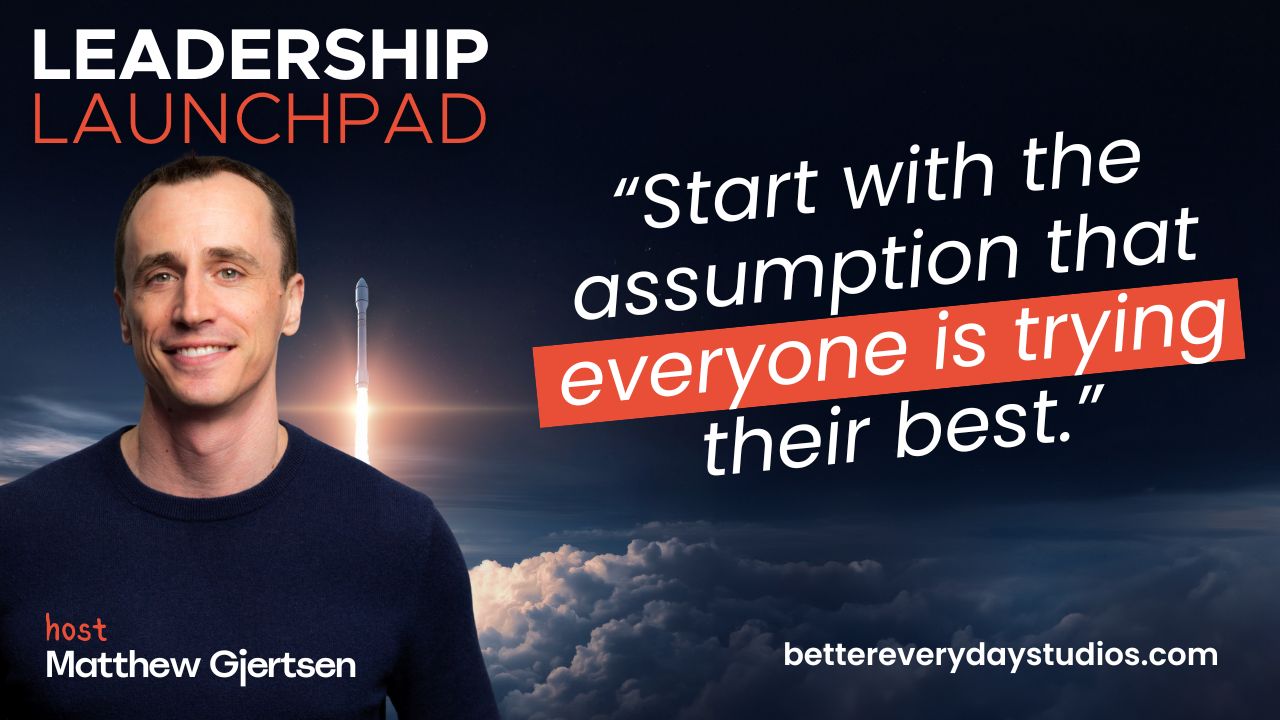
They felt second shift wasn't getting anything done. They felt that second shift was just causing them problems. And so no matter what they said or how they said it, all those words were going to get filtered through that belief that you're not doing your job. And so that's why he always came across as overly aggressive, overly negative, because it was all unconsciously kind of tilting the message that he was trying to send. And the exact same thing is going to happen with you and your team. If you're giving feedback from the wrong point of view, if you want feedback to be effective, to be heard, to be listened to and acted upon, then you need to be going into every bit of feedback with the best of intentions, with a true, sincere belief that the person you are giving feedback to is doing their best. They're trying to get things done, even if it was making a mistake, they made an honest mistake and you want to make them better. If you can't get into that headspace, I guarantee you the feedback you give is going to be in effective.
Matt Gjertsen [00:07:55]:
So the next time you are ready to give feedback, especially critical feedback, to a member of your team, go look up your technique of choice. It's great. You wanna think about that, to think about the words that you want to use. But before you deliver those words, spend some time reflecting and getting yourself in the right head space, the right belief structure about this individual put aside. I honestly don't care what you truly believe. You know, put that aside and for the moment of this conversation, you need to get into a space where you honestly care about this person, where you honestly want to see them improve. I don't care how many mistakes they've made in the past. In this instance, you are trying to make them improve.
Matt Gjertsen [00:08:42]:
You know they're doing their best. Put anything else on pause. Only focus on that as you go into this conversation and from that mindset, deliver your message and I can guarantee you it's going to be more effective. I know this isn't easy. It might be simple. It's not easy. That is why management is hard. That is why we have to practice.
Matt Gjertsen [00:09:07]:
Super simple setup. I hope you found this helpful. If you did, make sure you subscribe so that you never miss a future episode and I will see you next time on the leadership launchpad.


