
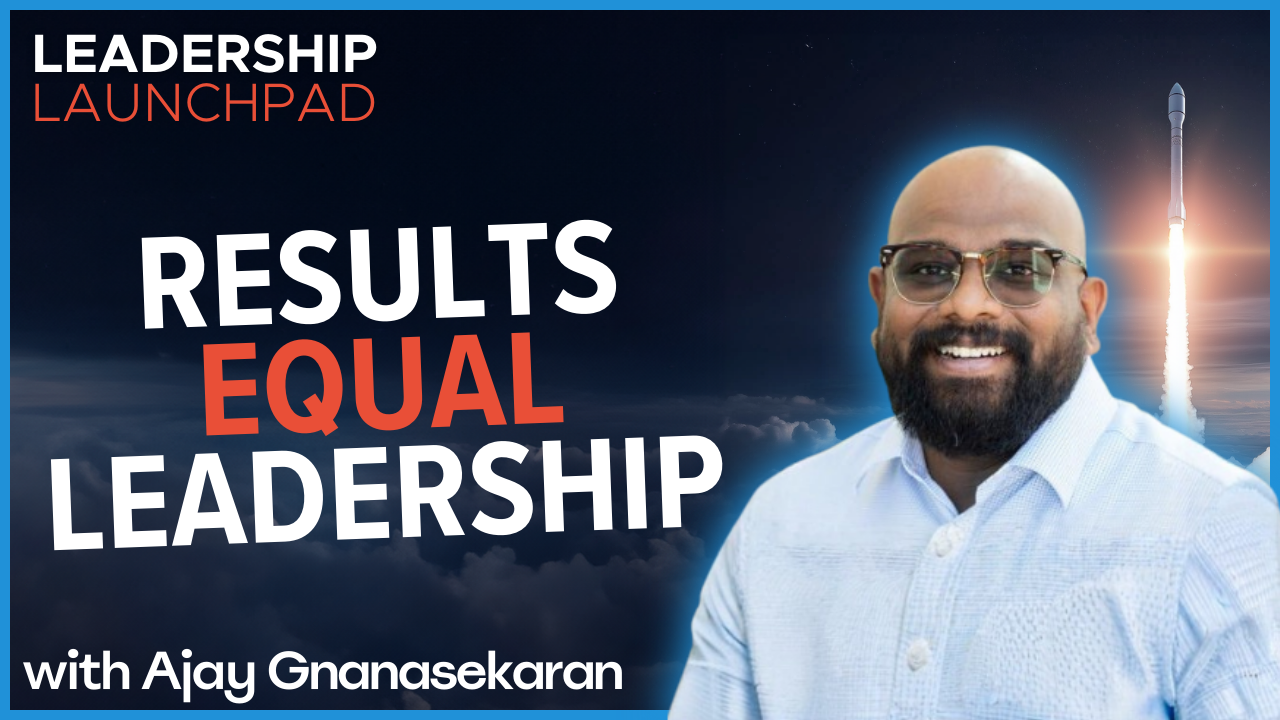
In this episode, Ajay Gnanasekaran, Senior Program Director for Battery Workforce Development at Argonne National Labs, shares his experiences leading large technical teams in high-growth manufacturing environments, including the build-out of Panasonic’s Gigafactory in Nevada. He discusses strategies for workforce development, overcoming challenges in recruiting and retaining talent, and the importance of cultivating a high-performance culture through servant leadership and accountability. Ajay Gnanasekaran explores how clear processes, technical education, and leadership training are vital for scaling operations and supporting rapid industry innovation. Practical examples and lessons highlight the need for adaptability and people-focused leadership to drive success in today’s evolving manufacturing landscape.
 Automated Transcription
Ajay Gnanasekaran [00:00:00]:
What I started doing was covering my base on personal and people, but then looking into what can I do to make my team happy. And that's where the servant leadership comes in.
Matt Gjertsen [00:00:29]:
As part of my role as the founder of Better Everyday Studios, I do a lot of potential client outreach. You know, I'm still in the phase of building the company where sales is really 100% founder led. Sometimes these conversations go somewhere for sales, sometimes they don't. And sometimes I get a really amazing and interesting surprise that comes completely out of left field. A few weeks ago when I jumped on a call with our guest today, Ajay Janisakaran, it was one of those surprises surprises. Ajay is currently the senior program director for Battery Workforce Development at Argonne National Labs. He has spent the last decade plus of his life building the exact kind of technical workforce we need to build a better future. He has done this as far away as Vietnam and for companies as large as Panasonic, where he is one of the youngest directors in the company when he led the strategy and program management office.
Matt Gjertsen [00:01:29]:
Today I am really excited to learn more about his experiences and not just his experiences leading technical workforces, but leading them in a way that creates a really high performance culture. Now before we get into that discussion, I do want to remind you that if this is your first time listening to the show, please make sure you subscribe so you never miss a future episode. And if you are already subscribed, first of all, thank you and secondly, I would humbly ask that you share this show with at least one other person who you think might it interesting. That after all is how we grow and I can't tell you how much it means to me with that. Let's get into the discussion with Ajay. Ajay, how are you doing today?
Ajay Gnanasekaran [00:02:11]:
I'm good. Matt had a good Christmas and I think I'm still basking on that week of leftover holidays before we go back to work again next year. So I'm doing really well.
Matt Gjertsen [00:02:23]:
Absolutely. This is a good time to do a little bit of reflection, which is actually exactly where I wanted to start because had the amazing opportunity to be part of the big build out, especially of the workforce around the gigafactory, Tesla's Gigafactory in Reno, Nevada. I remember a funny story that I once heard where maybe this is apocryphal, but Elon was going back and forth with the state of California trying to get approval for some location to build this giant battery factory. And while he's in these endless discussions, he literally Gets a text from the mayor of Reno, that's like the dozers just got on site, we're ready to go, let's sign the paperwork. But. And that's amazing. But from a workforce perspective, you build a big factory, like, where are the workers coming from? So I'd love to start there with just kind of what was that experience like building, building up that factory?
Ajay Gnanasekaran [00:03:16]:
It's surreal, right? I, after my grad school went into aerospace and was in aerospace for almost a decade and worked in big hangars, right? Like, you know, I've been to Boeing's and I've worked for Gulfstream. And you have big hangars and you sort of become snarky about. Yeah, I've seen some big structures. And the first time I interviewed with Panasonic at Reno, the talent acquisition manager at that time was like, hey, bring your walk in shoes and you're going to be like kind of coming into this building. It's going to be huge. And you. And I was like, yeah, whatever. I think I've seen big stuff and then hangers, I pull up and my perspective shifts completely.
Ajay Gnanasekaran [00:03:55]:
This is massive. Nothing I've ever seen. And you know, it was close to like 5 1/2 million square feet on the overall size. And it was just insane, right? So when I took over this role, what I started learning was, end of the day, when you run such a big manufacturing company, your KPI becomes two things. It's time and people. And yeah, if you mess up on either one of them, you're going to completely impact your business. And what we also found out was when you are pumping out cells in that quantity, Panasonic at that time was making close to five and a half million cells a day. Which is for me coming from low volume, high precision manufacturing was just mind blowing because how do you make sure the inventory is okay, how do you make sure that you take care of the scraps, et cetera, right? And it is people.
Ajay Gnanasekaran [00:04:50]:
So you have to have top notch processes, you need to have top notch people. And it has to go hand in hand and training workforce becomes an integral aspect of it. You have to have some sort of culture that holds together.
Matt Gjertsen [00:05:06]:
And I think especially in that situation, because so often, you know, I think it's, it's often said that when, if you're trying to create, you know, bring in new talent or create new talent in your organization, you can build it or you can buy it, right? I would say most industries, most companies are heavily indexed on the buy it. We're just going to Go higher. But this was a situation where maybe there's no one to hire, right? Like, like, how did, how. What was kind of the process of thinking through? Because this is kind of what even what you're doing today of thinking through, like, where is this workforce going to come from? What are the gaps that we're going to need to close? Like, like, what was that process? Like, how do you even think through that?
Ajay Gnanasekaran [00:05:44]:
So I think it's. It's a combination of both, right? And, and honestly, when you run an operation that big with 3,600 people, 24, 7, 365, you have to do both. You have to train workers at the same time, figure out new pipelines, and you have to be extremely creative about it. Right. In Nevada, we used to joke about how we used to bring in blackjack dealers to become electrode operators. And how do you do that? There's no sort of written process for that. Right. And the problem we, at that time, Panasonic was facing was you would bring all these workers in.
Ajay Gnanasekaran [00:06:19]:
So the pipeline starts, they would come in and within a week they would start leaving. So you wouldn't know why they're leaving. So attrition becomes a big problem then. So then you go into understanding. So I was the director of programs and strategy, and one of my team members dedicated himself to essentially help the talent acquisition team to do a understanding of, like, why are these people leaving and how can we control this attrition? And he was really successful in understanding really small nuances. Right. Language barriers. Right.
Ajay Gnanasekaran [00:06:55]:
People would come in thinking that, hey, I can do this, but language is a problem. Number two, ppe. So when they, like put on papers or they have to wear like, you know, masks and things like that, people sometimes don't want to do that. They feel claustrophobic. So that's a huge reason. Number three, they have no idea what industry this is. They see Panasonic, they see a solid job, and they come in, they don't even know what industry it is. So that's a big problem.
Ajay Gnanasekaran [00:07:27]:
They come in and they see these almost a mile long electrode machine and they go, oh, this is too advanced for me. I don't want to do this. So that's a problem. So how do you take all these problems, take them to the earlier of a value chain and address it so that when you put that as a filter, the pipeline becomes more refined. So people coming in are not leaving out. So that's the way you look at it. And technical education for that is very important because you need to Sort of Understand what Battery 101 is before you come work in a process making batteries.
Matt Gjertsen [00:08:01]:
Yeah, that's really interesting. Especially that point about kind of, I'm sure some of it's a language barrier and also that understanding of the industry because we, you know, especially manufacturing in general in the United States has been just on the decline for so long. The only way to build it back up is to bring in these non traditional people, but it's making those non traditional people. Nobody likes to feel like they don't know what's going on. Nobody likes to feel like they're unsure or don't understand their environment. And so if you don't kind of instantly give them that juice of we're here to welcome you, we're here to explain this from the ground level. Yeah, they're going to feel out of sorts. How did.
Matt Gjertsen [00:08:48]:
When you mentioned kind of the battery 101 was a lot of that just adjusting, kind of like the onboarding process. Is that. Is that kind of where a lot of it went to? Yeah.
Ajay Gnanasekaran [00:08:57]:
One of the things I would say is Panasonic probably was one of the best companies I worked for from a culture standpoint. Right. They took things seriously about making everybody feel at home, you know, talking to everybody with curiosity, servant leadership, all of that was taken very seriously. And they essentially would figure out ways to come up with like, hey, can we set up a pathway program for the local community college where if they feel that they want to get ready and then come in here, they can go to this community college pathway program. And then they kind of route into it, sort of like an apprenticeship program. So things like that they would do. And they actually built a big lab right now, if I'm not wrong, they had with Truckee Meadow in Nevada and same thing in Kansas as well. So Panasonic did a pretty good job about, you know, kind of understanding what people needed and then giving that to them.
Ajay Gnanasekaran [00:09:54]:
And after a certain point, technical education is important, but then you start becoming supervisors, managers. How do you lead people? Because that's something that sometimes people don't have experience in. Right. First time managers, it was like, it was like the war, right? Like, you know, somebody falls and then suddenly this, you know, person is given the gun and be like, yeah, you're in charge of this and they don't have an idea. So how do you, in that time be quick, turn around. So they gave a lot of leadership coaching on that. And high performance culture was one of those biggest, biggest, how do I say, a template that they used and it was very helpful for a lot of reasons, right. For somebody like.
Ajay Gnanasekaran [00:10:39]:
One of my favorites was used to be called as respectful courage. First time manager coming in, trying to push back on an idea or a statement made by a leader. Most of the time I used to struggle with that because I've always been in a shoe of like being a young manager, having to be with my peer who's much more experienced than me, but I would want to give up my idea. So respectful courage helps that person to say, I hear you, but I want to respectfully push back. And this is what I suggest. And I think that element helps people to listen. Right. And then also kind of if you're wanting to deal with somebody who is not performing well or not doing the right thing, you have something called as an accountability dial which essentially has different stages and each and every stage is like the first stage is just mentioning.
Ajay Gnanasekaran [00:11:30]:
The second stage is kind of making a point. And then slowly by the time you have the last stage and you're ready to make a decision, that person is not going to come and say, oh, I never knew about this because you have went through the entire accountability dialogue. And so things like these were very helpful. One of my favorites was control, influence and gravity. Right? That was one thing which I still use in my day to day life. Control is anything a task given to Matt. For example, you say, I got this. I don't need anybody to help me in this task.
Ajay Gnanasekaran [00:12:06]:
I'm in control. So when you put your task on the board, there's a C next to it, meaning Matt's been assigned this task. He's in control. He's got this. Say the same task, you got it, but you need some sort of influence either left, right or up, down from above. But you still got it. But you then say, I need some help from X, Y and Z. And that person has to be in the room and acknowledge that and say, matt needs this help.
Ajay Gnanasekaran [00:12:35]:
I'm ready to help. So what would be is the task would still be Matt, but it would say influence with that person's name on it. So it means that it's not just Matt right now. He needs help from that person and that person that said yes. And then the third is gravity. You both work it out. It's not possible. A big capex decision has to be made and your leader has to make that decision.
Ajay Gnanasekaran [00:12:56]:
So at that point, the leader says, don't worry about it. You don't wake up and worry about gravity. So throw it on to them, put a gravity there and they're in charge. And the cool part about it is whichever tier this thing happens, maybe it might be happening in one of the processes in production. And the gravity, says the president, Allen Swan's name, for example. At that time, he would show up to the meeting and give his response.
Matt Gjertsen [00:13:20]:
Interesting.
Ajay Gnanasekaran [00:13:21]:
So that tiered approach helped people to be accountable throughout the spectrum. And I thought that was phenomenal. That was a huge learning experience for me and that taught me how I can use that for leading big teams.
Matt Gjertsen [00:13:34]:
I really like. Man, there's so many things I want to bring up here. But let me stay right on this point because I really like it. Because I did a podcast a few weeks ago, it was around this idea where I felt like the vast majority of problems that I have experienced in large organizations, the things that are actually making my life more difficult, they were all problems that were either above everyone's pay grade or that were both above everyone's pay grade and below everyone's pay grade. Like anybody who cared didn't have the authority to do anything about it, 100%. And anybody who had the authority to do anything about it didn't care. And it really sounds like this three tier approach is meant to tackle that exact problem. Is that right?
Ajay Gnanasekaran [00:14:24]:
100% right. Because if you look at it in any manufacturing organization, right. Aerospace, you know, supply chain, I worked your. Your stage is supposed to be two. Two tiers essentially should be operation and innovation. Right? Operation is supposed to be your daily drumbeat. Low risk, low governance should be happening. Yeah, innovation is going to be high risk, high governance, but that's setting your thought leadership for your company.
Ajay Gnanasekaran [00:14:55]:
But what happens in manufacturing if you don't have the right setup of your leadership as a midterm, life cycles pops up, which is called the escalation. And what happens most of the time if you don't have the right process? Escalation creates a vortex. It picks up people from innovation, it picks up people from operation. And everybody is firefighting constantly. No work that gets done in operation, no get work done, gets done in innovation. It's pure firefighting all the time. And you would see that in a lot of supply chain organizations, especially with procurement, they wouldn't have a good ERP system, right? And they would all try to buy out of Excel. And then you're chasing parts, your production is always delayed, so it just creates pandemonium.
Ajay Gnanasekaran [00:15:43]:
So I always go from ground up and say, all right, for this organization to run, what are the processes? What do we map? And then based on that, you train your team to kind of keep their eye in the game. Anything which is not on the eye in the game is non value at don't do it, let's shoot it. And that's where I always felt that the high performance culture was very, very cool in terms of what it had in terms of templates and the teachings of leadership.
Matt Gjertsen [00:16:14]:
So these different, like these three examples that you gave of kind of respectful courage and the control influence, gravity, were those all aspects a defined high performance culture within Sonic? Because that's kind of.
Ajay Gnanasekaran [00:16:28]:
They had, they had their own culture and I don't remember. I think there's some changes that has happened since I've left, but it was very much taught from day one and in every meeting.
Matt Gjertsen [00:16:40]:
And that's another thing that I really wanted to harbor on that I really love is because kind of, as you said, you know, there's one thing about finding talent and bring it in, but then in any growing organization where you're trying to do a lot, there's a lot of spot promotions, you're pushing people forward, and then all of a sudden people don't know what to. And I think we run into the challenge of. In all things in life, I think there's three levels of understanding. There's, I don't know the rules, I know the rules and I can follow them. And then there's I know the reason for the rules and kind of like can operate beyond them, right? Like those are like the three levels. And the challenge is, is that in so many organizations, the people who move up really quickly, who are the founders who are. Who are really successful for some reason, they kind of started at level three, like they picked up something in their life. This is like Michael Jordan level basketball players, right? Like it just makes sense to them, right? But for whatever reason, they never needed like firm rules of how to operate, right? And so then the challenge is that because that's where the majority of like the really high performing leaders come from, they don't see the need to write down clear rules.
Matt Gjertsen [00:18:01]:
And so then when there's people who don't start at level three who are like coming up and they've maybe they, they didn't get it from osmosis, from their parents or from their environment or school or whatever it was, they never, they never got those basic instructions. And so they, we promote them and there's like nothing and they don't know what to do. And they're just kind of trying to piece it together. And the best organizations are the ones that take a minute to clearly Define things knowing. You know, when you talked about respectful courage, there was very clear language that you used. And it like reminded me of. In just about every active listening training or seminar workshop that I've ever been to, they'll do something like, you know, somebody talks to you and you always respond back. So what I hear you saying is, and those rules, that seems really forced.
Matt Gjertsen [00:18:55]:
It seems maybe not fully genuine because who actually ever talks like that?
Ajay Gnanasekaran [00:19:00]:
Yeah.
Matt Gjertsen [00:19:01]:
But the intention isn't for you to talk like that forever. The intention is while you're learning the rules, to use those as the rules until you figure. Until you figure out your own language and you can move beyond the rules.
Ajay Gnanasekaran [00:19:13]:
Exactly, exactly.
Matt Gjertsen [00:19:14]:
Right. But if you don't have those rules in place, then there's nowhere for people to start.
Ajay Gnanasekaran [00:19:18]:
Absolutely not. Absolutely not. And I want you to Let you finish the question and I'll answer it.
Matt Gjertsen [00:19:25]:
No, please, please. Yeah, go.
Ajay Gnanasekaran [00:19:28]:
But the thing with what you just said, it 100% makes sense, right? Because I've worked for large organizations. I work for small organizations. And what small organizations struggle with is people and extra hands to create, to build a set of rules that can help all of them operate in that level so that they all can grow together. So most of the small operations fizzle out or stay in that level because that's the way they can operate. It's always constant pandemonium. Right. And when you go to large organizations, I worked in large organizations where it's sometimes too many rules, meaning.
Matt Gjertsen [00:20:08]:
Yeah, 100. Yes.
Ajay Gnanasekaran [00:20:09]:
You know, it doesn't allow you to be aerospace. I'll give you a biggest example. You cannot, you cannot be avant garde, you cannot be fancy. You have to follow a set of rules because FAA tells you to do that thou shall do. And even within other branching support organizations, a lot, a lot is done because they're like, if it's not, if it's not broken, why do you want to fix it? Sort of mentality. Right. And I think we struggle with that in aerospace industry. But the companies that have figured it out are not just trying to get a baseline for people to rope on and climb, but also gives them space to see if they have the ability to be Michael Jordan's and they have not yet been found.
Ajay Gnanasekaran [00:20:57]:
I'll give you a big example. Right. There are places when you have a big factory and there is like, there's, there's a problem everywhere. And what I do generally is when I see a potential in somebody in my team, I would throw them in the most ambiguous environment possible. And that's Always been my test. And if somebody is able to work, it's not, it's not about their good or bad. But those Jordans that you're talking about, those are the people who, you know, what do they call industry term? I forget. It was like the new trending Vuca or something like that.
Ajay Gnanasekaran [00:21:31]:
Vulnerable, right?
Matt Gjertsen [00:21:34]:
Oh yeah.
Ajay Gnanasekaran [00:21:35]:
It's ambiguous. Something like that. Right. I read about that and I was.
Matt Gjertsen [00:21:39]:
Like oh yeah, yeah, exactly.
Ajay Gnanasekaran [00:21:42]:
Volatile and yeah, whatever. So when I put them in there, what surprised have. I've been surprised a couple of times is I don't even get a result. What I was expecting, but something completely opposite.
Matt Gjertsen [00:21:58]:
Yes.
Ajay Gnanasekaran [00:21:59]:
And those are people who. What you just said is draw their experience from other draws of life and present a solution which was never even thought about. And that was just game changing. And the new industries have to evolve at that speed. Critical minerals, batteries, energy. We don't have time to play it safe, we don't have time to play it by the rules. You have to have somebody, you know, leapfrog constantly. If you are competing with a global arena, manufacturing, we're not there yet in the US and we need people like that to make those decisions.
Ajay Gnanasekaran [00:22:37]:
One point to finish off this question. I made it my life's goal. Whenever I select program managers, I don't normally go for people with like project management, PMP experience. I'll bring somebody who's worked as a quality manager and bring in as a pmo and the way he handles projects is completely different because he's got his filter on quality. And I'll bring somebody in from manufacturing engineer. So that's the way I like to look at it. Because I never was a project manager by training. Right.
Ajay Gnanasekaran [00:23:10]:
I was a supply chain guy, strategy guy and then I was given program management. So that's how I look at it. And I feel like that's much more easier to look at in terms of solutions.
Matt Gjertsen [00:23:23]:
Yeah, it's. It's interesting. I find. I'll never forget when I was in the Air Force, they had an initiative called AFSO 21. It was Air Force Smart Operations for the 21st century. And it was, it was kind of meant to be like, I don't know, like their version of agile thinking or something.
Ajay Gnanasekaran [00:23:40]:
Okay.
Matt Gjertsen [00:23:41]:
I just remember going to. Because you could get like green belt certified and black belt certified and all that kind of stuff. And I just remember going to a meeting once and I could tell that maybe not the whole thing, but the individual leading that meeting, you could tell they had kind of lost the forest for the trees. When, like, it was really important that you used this color sticky note and not that color sticky note. Yeah. You know, and that, that's the danger that can happen in all of the. Setting any kind of rules, whether it's rules around project management or leadership or whatever is. You.
Matt Gjertsen [00:24:13]:
You want to, you need those rules, but you have to always realize the rules aren't the point. Like, there's some outcome. That's the point. And, and leave room for that.
Ajay Gnanasekaran [00:24:23]:
Yeah, absolutely.
Matt Gjertsen [00:24:24]:
100 really important. So we, as you just said, you know, there's so many of these critical industries that we're really pushing really hard right now in the US and we, we kind of can't afford to do things the way they've always been done. So we need new. We need new people. We need people who can move forward quickly speaking. I'd love to, you know, from your experience then, being someone who moved forward really quickly, who was put in situations where, you know, you're leading people who have more experience than you, you know, like, what were some biggest challenges that you remember facing early in your people management career? And, and how did you tackle those?
Ajay Gnanasekaran [00:25:03]:
Absolutely. I mean, that's always. I, I tell the story to everybody. And I made people manager when I was 26 years old. And I mean, it's, it's in manufacturing, it's kind of sometimes not that much. You would see that's not common in manufacturing, especially in the South. Right. So I took over this team and I had people whose experience was as old as me, and I even had a lady who reminded it by saying, oh, I got shoes older than you.
Ajay Gnanasekaran [00:25:32]:
And I took that as a sense of, oh, she's being nice. And the way I looked at it is one of my biggest, earliest teachings was from my mentor, Tom Ardito, who I would say most of my leadership skills come from his school of teachings. And one of the things he would say is results equals leadership. That's it. You can be a great speaker, you can be whatever the great. All of that are objectives. End of the day, results equals leadership. So what I said was, okay, so if they put me in charge of this team, I need to be in a position where I cover three things.
Ajay Gnanasekaran [00:26:13]:
Personal leadership, people leadership, and thought leadership. Those are the three things I show up, I do my task, I do it so well that people start resonating on my frequency. So I cover the people leadership standpoint because being a manager is easy. Being a leader is different. Right. I can delegate tasks to anybody and say, the boss needs it. By this time and most of them get by by doing that. But being a people leader, that's the change.
Ajay Gnanasekaran [00:26:40]:
Right? So what I started doing was covering my base on personal and people, but then looking into what can I do to make my team happy. And that's where the servant leadership comes in. And servant leadership is something that I learned through trial and error. I didn't know it was called servant leadership at that time. I was not educated on leadership as much as I am right now. So all I did was, if they win, it's our victory and if they lose, it's my loss. So keeping that template in, I started doing it and one of the biggest challenges was, I think we're trying to win an Airbus award. And I don't know if you've worked with Airbus or any of these big OEMs, they have these requirements called as the grass.
Ajay Gnanasekaran [00:27:30]:
It's called general requirements for equipment suppliers or something like that. You would age dog years reading that document. And that was my first challenge. Our company at that time was just an early startup which was just purchased by another big company, and we had to get compliant with GRES for us to win that award. And I had to do that within like, eight, nine months. And the way I had to do it, that gave me the experience. So always try to look from people's perspective. Why should they listen to you? What do you have to say that helps them to listen to you? It either must be kind or it must be more thoughtful.
Ajay Gnanasekaran [00:28:12]:
If you don't have thoughtfulness on your side, at least be kind to start with. And you will learn from them a lot. I've literally been. I worked with a lady who was in her 70s at that time, and she was the best procurement agent for leather. We were building aircraft seats and she would, like, take me in the car to the. I was technically her boss, but she would, like, take me to the supplier, teach me everything about leather procurement and things like that happens because I wasn't thoughtful at that time, but I was very kind. I was asking her for help. And that always goes a long way.
Ajay Gnanasekaran [00:28:50]:
If you don't have anything intelligent to say, just listen. I listened a lot.
Matt Gjertsen [00:28:55]:
I always say if I could have a billboard that, that every manager could see with one phrase on it, it would just be. It would say, just stop talking.
Ajay Gnanasekaran [00:29:04]:
Talking. Exactly.
Matt Gjertsen [00:29:05]:
Especially new managers. We just. We just want. You're all. You're trying to prove your worth, prove you're supposed to be in this role, and all you're doing is digging yourself a big hole. Yes, but I But I love that question that you asked of why should they listen to you? You like why? And having a good, having an honest answer to that question.
Ajay Gnanasekaran [00:29:26]:
Yes.
Matt Gjertsen [00:29:26]:
Goes a really, goes a really long way. Awesome. Ajay. Well, this has been fantastic. I'm really glad we took the time to sit down. I'm sure there's endless stories from more from the build out of Panasonic and Gigafactory and everything. But this has been really great. I think we've gotten some really good nuggets that people can pull on because there's just so much happening in manufacturing right now.
Ajay Gnanasekaran [00:29:49]:
Right.
Matt Gjertsen [00:29:50]:
There's so much explosive growth. We're focusing a lot on the technology side and the funding side, but we need to focus on that on that people side as well.
Ajay Gnanasekaran [00:30:01]:
Absolutely.
Matt Gjertsen [00:30:01]:
If we want to make sure we're hitting these goals that we have.
Ajay Gnanasekaran [00:30:04]:
Absolutely. And just to just round that off, I work with all sorts of pipelines right now. Right. I have, you know, future pipelines which are students who are in school and then emerging with people coming out of colleges and then current workforce which is, you know, reskill up skill. We as a country just overall lack in like the technical leadership and training. So doesn't matter if it's aerospace, shipbuilding, critical minerals. There is a set of curriculum that we can provide and we can coach. And I think everybody needs to look at it right now because that's the biggest problem.
Ajay Gnanasekaran [00:30:47]:
And we're, we're, we need to get that really soon into these, the young emerging in the future, at least so that we're able to, you know, withstand the competition. Yeah.
Matt Gjertsen [00:30:57]:
Awesome. Well, thank you so much, Ajay. I really look forward to chatting with you again soon.
Ajay Gnanasekaran [00:31:02]:
Absolutely. Thanks, man. Appreciate it.
Matt Gjertsen [00:31:05]:
Thank you so much for listening in on the conversation. I hope you got as much out of it as I did. If you are a manager yourself and you're looking for more insight onto how to better lead your team, please make sure to check out some of our other amazing episodes. If you are responsible for developing leaders in your organization and you're struggling to make programs that actually change behavior and actually impact the business, please reach out so we can figure out how to make your organization better every day. Drop me a line using matttereverydaystudios.com I look forward to the conversation.


