
OVERVIEW
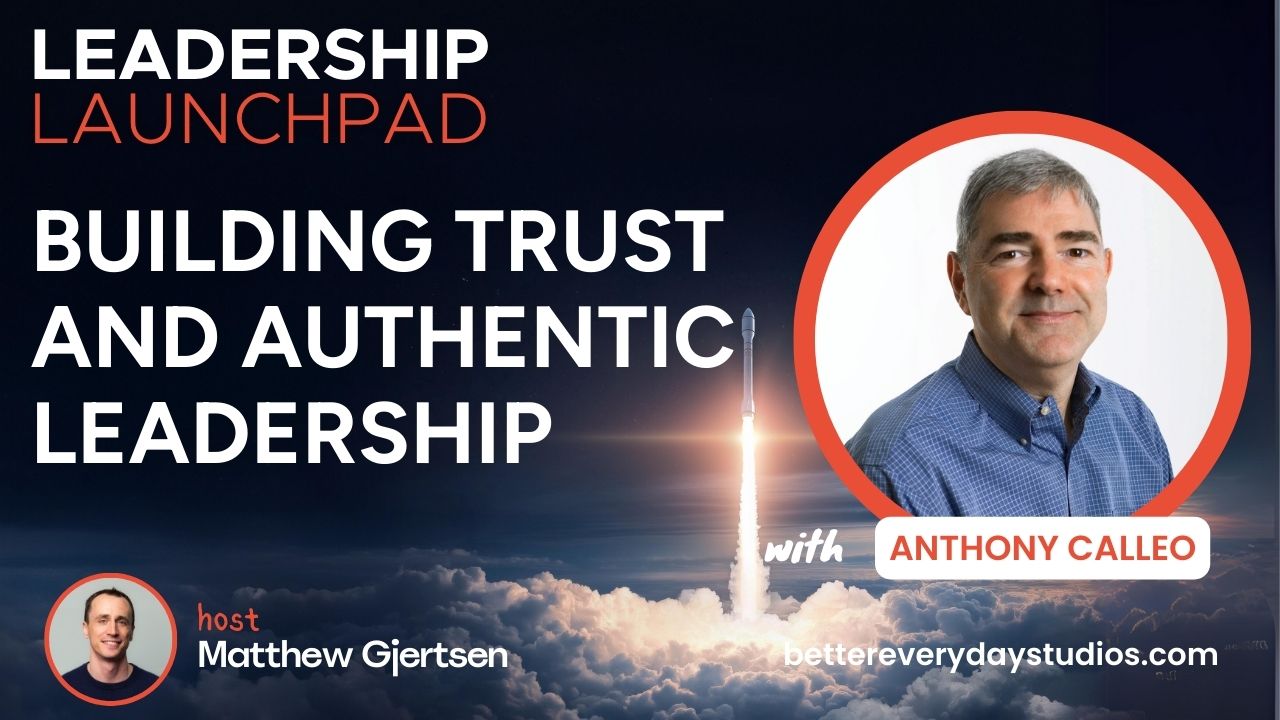
On today’s episode we chat with Anthony Calleo, founder and Chief Employee Experience Officer at Anthony Calleo. We explore the evolving role of leadership in enhancing the employee experience during times of rapid organizational change. Anthony shares profound insights on the impact of leadership on employee trust and well-being. We discuss strategies for effective change management and the importance of honest communication. Anthony explains why "comfort's a cage" and emphasizes the necessity for leaders to show vulnerability and authenticity. Interested in leadership development and building better employee experiences? Tune in!
Keep in touch with Anthony on LinkedIn:
https://www.linkedin.com/in/anthonybcalleo/
Or on X (Twitter): https://x.com/AnthonyABCNY
Check out Anthony Calleo at: https://www.calleoex.com
Want more tips on effective training? Sign-up for our weekly newsletter: https://www.bettereverydaystudios.com/newsletter
Visit us at https://www.bettereverydaystudios.com
 Automated Transcription
Anthony Calleo [00:00:00]:
Doing some leadership training and breaking down what it means to be a good leader, being exposed to good leaders, interviewing good leaders sort of informed me, right. So that, you know what I mean, you know, if anyone who's a facilitator knows, it's an amazing classroom because you end up learning so much and gaining as much from the class and your development as you do otherwise. And I think, you know, and honestly, right until this very moment. And your question? I don't know if I ever thought of it that way, but it's, yeah, it's that, you know, doing a deep dive into leadership training and what good looks like because I didn't want, you know, I didn't want hash hypocrisy when I was standing in front of a room teaching, you know, leadership training. So, you know, that, that definitely informed a lot of, you know, a lot of what I did and how I got to where I am today.
Matt Gjertsen [00:00:47]:
Hello and welcome to the leadership launchpad, where we help managers improve themselves, their teams, and their organizations. On this show, I talk with industry leaders, coaches, authors, and experts to give you actionable insights that will help improve your own performance and the performance of those around you. Our guest today is Anthony Calleo, the Founder and Chief Employee Experience Officer at Calleo Ex. With a background that spans large enterprises like Disney, innovative startups, and financial services, Anthony seeks to blend the art and science of human capital management to drive organizational excellence and create thriving workplace cultures. In this discussion, we cover the current state of the employee experience in corporate America, how you can learn not just from your good managers, but also from the bad ones, why mid level managers are so important, the perils of fear based leadership, and so much more. Before we get into the discussion, I do want to remind everybody that if this is your first time listening to the show, make sure you subscribe so you never miss a future episode. And if you were already subscribed, it would mean the world to me. If you would take a moment to like or rate this show, it really makes a difference.
Matt Gjertsen [00:02:08]:
And with that, let's get into the discussion with Anthony Calleo. Anthony, welcome to the Leadership Launchpad. How are you doing today?
Anthony Calleo [00:02:17]:
I'm doing outstanding, Matt, and super excited to be here with you.
Matt Gjertsen [00:02:21]:
Yeah, I'm really glad we got to do this. You and I chatted a few weeks ago after getting connected, and I think I know we're going to talk a lot about leadership. That's kind of what we're primarily going to dive into because that's, that's what the show's primarily about, but your company is focused on kind of a bigger picture idea of employee experience. And as we were talking right before the show, I mentioned, I think we're in kind of a weird state where it seems like, you know, you go back to 2020, and Covid and employee experience became, like, the focus area of a lot of organizations, especially, as, you know, lots of talent was moving all over the place, and everybody was worried about keeping keeping people. And at least in the last, I don't know, maybe six months or so, it feels like the pendulum swung a little bit, and a lot of organizations are maybe not so focused on providing a good employee experience. So I just wanted to get it from you. Like, what is the state on the ground of kind of employee experience that you're getting a sense of from your conversations?
Anthony Calleo [00:03:21]:
Yeah, that's a phenomenal observation. And I gotta say, that was our. And not just folks that did employee experience, but culture, but just, I would say, HR and internal communications in general. Our biggest fear was when Covid's over. Right. Or when the pandemic, you know, kind of slows a little bit. Now, that would be definitely something to celebrate. But from an engagement standpoint, right, from an employee experience standpoint, are we gonna suddenly start being less intentional? So what we had found was that it was a lot easier to get the resources and get the initiatives approved during COVID Right.
Anthony Calleo [00:03:59]:
And so it was an exciting time, but we always kind of, like, you know, whispered to each other because we didn't want to say it out loud, like, is this going to change when, you know, Covid and, you know, Covid started with, you know, two weeks to end the curve, and then it, you know, kind of just as the pandemic unfolded, it stretched out, and we kept asking ourselves that. And so, yeah, I think that, you know, there's a lot of things happening, right? There's sort of a, you know, taking your foot off the gas on employee experience. There's the entire work remote hybrid. We want you all back in the office argument, which is all part of an employee experience. So it's, you know, really, it's folks like that are in MySpace and NHR that are really trying to, you know, make our way, you know, through all of this. Right. But, no, you're absolutely right. I think we were, and one of my favorite words, and I apply it in a lot of different areas, is being intentional.
Anthony Calleo [00:04:56]:
And we were very intentional about our employee experience, employee engagement, and doing, you know, fun stuff. What, you know, what were you wearing for Halloween? What's your go to comfort food? I mean, we were just doing some really cool, fun stuff, which quite honestly, I think as an employee experience, and I'm sure the internal communications folks out there say, like, we've always wanted to be doing this kind of stuff, right? So we were able to kind of run a little loose and wild and use our imaginations during COVID and now there's been sort of an easing off on it a little bit. And that's sort of that continual struggle and debate that we have with our businesses about like, this is how you want your employees to be engaged. It's not just like this one time special thing. And, you know, we can get into this, you know, when we talk about leadership and other areas. But I firmly believe, and I think a lot of people are on the same wave like that it's going to be increasingly an expectation on employees that they are engaged and they are, you know, they have, do have positive employee experiences.
Matt Gjertsen [00:05:58]:
Yeah. Well, yeah, I mean, it's, it's definitely been a trend that probably isn't going away. And I think that, you know, it might seem like a lot of people can pull their foot off the gas right now because it feels like, you know, everybody's asking, are we in a recession? Are we not? There's lots of layoffs. And so as you get into kind of that softer labor environment, probably generally companies feel like they have a little bit more leeway, for sure. But if you just, if you look at the longer term trends, like, there is no way that we don't re enter a tighter labor market where there is fiercer competition for talent. Um, so it makes sense that, you know, it's, it's still going to be a continuing trend, that it is something to focus on.
Anthony Calleo [00:06:43]:
Yeah, no, for sure. And it, listen, you know, to me, it separates the have to dos between the want to dos, like the companies that, you know, you know how to do it because of COVID That's one thing. And they're sort of backing off. It's the companies that wanted to do it that are the ones that sort of can sustain it. And I think you're absolutely right. I mean, that's what I observe is, you know, the debate, if you want, if we're technically in a recession or not, the fact of the matter is the job market has tightened and things have, as you say, swung back into the employer's favor. Right. And so that's definitely having an effect, I think, you know, just sort of like the great resignation.
Anthony Calleo [00:07:17]:
What's going to happen is once the market starts loosen up again, there's going to be sort of another great reckoning. Right. And so you really want to have those companies that, you know, understand the importance of it and want to do it and not feel like they were compelled to do it in response to a, you know, in response to a pandemic or whatever the, you know, situation was.
Matt Gjertsen [00:07:36]:
Yeah. Yeah. Well, and, you know, I mean, you mentioned this idea that this was something that, you know, kind of the, those of us in HR were kind of feeling. But often, you know, I mean, you know, this was, I do, you know, when it comes to things like employee experience, the place where the rubber meets the road is with the leaders, for sure. And I often think as these changes happen, we're sending signals to leaders about what we're expecting of them, who they're supposed to be. Thinking back to the conversation we had a few weeks ago, you brought up this idea of leaders wearing masks and having some kind of expectation. I think, you know, in terms of our discussion about leaders, I would love to start there of this kind of idea of where do you, in your experience, where do some of these ideas of who we're supposed to be as a leader tend to come from for new leaders?
Anthony Calleo [00:08:29]:
I mean, I think in a much broader sense, it comes from your entire book of beliefs. Right. It comes from, you know, what you learned, what you learned from your parents and what you learned from school and then how you were mentored when you grew up through a company. And you talk to a lot of organizations and they want formal leadership training, they want to develop their leaders, but more often than not, they're battlefield promotions. And we can get a little bit deeper into how and why people are promoted. But, yeah, that was the biggest thing for me. Listen, I went through it even prior to me taking a leadership role came from a time and place where, and I worked in some environments where I couldn't show up as my authentic self, and I had to wear that mask every day. Right? And so I was the person I thought my managers at the time or the organization needed me to be, and then eventually my people.
Anthony Calleo [00:09:29]:
Right? And so it takes, not only does it take leadership training, it takes a lot of self, you know, self work, self love, working on yourself right. Before you could show up as a leader for somebody else. And, you know, the, the pressure, not only does that have on your people and the organization that you're leading, but ultimately, you're bringing that stuff home. Right. You know, to, to whatever situation and you bring it to your family or your partner or, you know, whatever the case may be. And so it's not a. It's not a great place to be. And I think, yeah, so, I mean, I think that's what I meant by, you know, the, you know, the wearing of the mask is.
Anthony Calleo [00:10:11]:
And to me, that's the ultimate. Like, you know, we talk about, you know, diversity, equity and inclusion, which, you know, is under a little bit of pressure nowadays. It's, you know, the ultimate, you know, belonging in that scenario is for folks to show up, individual contributing leaders to be able to show up as their authentic selves. Right. To me, that's the ultimate environment.
Matt Gjertsen [00:10:30]:
Yeah, yeah. What, you know, you're talking about kind of that. That self work, that inner work that you need to do. What did that? I know very, you know, I definitely went through a lot of that for myself when I first became a leader. I don't know, what did that look like for you, since it sounds like you, you were kind of in an environment where there were these certain expectations of who you should be. I guess there's two parts of this. There's the inner work. Yes.
Matt Gjertsen [00:10:58]:
How much of it was the inner work that allowed you to show up as kind of an authentic leader? And then also, what. What changes had to happen around you in the organization to allow you to show up as an authentic leader?
Anthony Calleo [00:11:09]:
Yeah, that's a great question. So let me. Let me address the last one first, which is I. I think there were a lot of organizations that didn't necessarily allow me to show up like that, but I had. I was lucky enough to have some really good leaders that I reported into that did. Right. So. Cause you can't always, you know, I would love to say that you can always look at the tip top of the organization or, like, just the organizational culture, but sometimes you just gotta look at your immediate management.
Anthony Calleo [00:11:35]:
Right. And enablement that, you know, they allow. And then kind of just to go back, you know, I learned a lot. I learned a lot from my really bad managers. I don't even want to label them leaders. Right. You know, because I don't think, you know, folks that don't lead don't deserve that title, right. So I learned a lot from my bad managers.
Anthony Calleo [00:11:56]:
And there's one or two routes, right. You can either get mentored by that and replicate that, or you can remember how that made you feel, right. And so that sense of, hey, listen, I wasn't showing. Not only am I not showing up as my authentic self, I'm not really feeling great about myself right. And that can all, you know, that all leads to what I dealt with was, you know, a hefty dose of imposter syndrome that I also had to work through as well, you know, as we, as we developed on. So it was a lot of work on, you know, it was a lot of work on myself. And, you know, honestly, Matt, it wasn't just like one thing. Right.
Anthony Calleo [00:12:30]:
It was a combination of having really good leaders and then, you know, I was in the unfortunate position where I started in this space as a learning and development professional. Right. And so doing some leadership training and breaking down what it means to be a good leader, being exposed to good leaders, interviewing good leaders sort of informed me. Right. So that, you know what I mean, you know, if anyone who's a facilitator knows, it's an amazing classroom because you end up learning so much and gaining as much from class and your development as you do otherwise. And I think, you know, and honestly, right until this very moment in your question, I don't know if I ever thought of it that way. But it's, yeah, it's that, you know, doing a deep dive into leadership training and what good looks like because I didn't want, you know, I didn't want hashtag hypocrisy when I was standing in front of a room teaching, you know, leadership training. So, you know, that that definitely informed a lot of, you know, a lot of what I did and how I got to where I am today.
Matt Gjertsen [00:13:32]:
Yeah. It kind of feels like that is another reason, you know, we can kind of nerd out on, like, the instructional design portion of it, the L and D portion of it. Another reason to include leaders in your organization in the lead as facilitators or as mentors in your leadership training. Because I think a lot of times maybe we assume, oh, the leaders out there, they're super busy, they got stuff to do. We're going to, we can take it all on our shoulders. We can do all the facilitation. But, yeah, even probably those mid level managers, engaging them, as long as you can coach them to be good facilitators and everything because you're 100% right. Like teaching this stuff, engaging this stuff even before you are an expert in it can really step up your game.
Anthony Calleo [00:14:15]:
Yeah. And listen, you hit on something really important, which I think a lot of organizations don't often do, is to, there's one thing to, you know, to teach what good looks like. There's another thing to show it. Right. So by having those leaders come in and talk to, you know, talk to the guys. You're actually showing what does good look like. And that applies to a lot of different areas. Like, you know, when you're trying to instill missions, visions, value and purpose, you know, we put the words out there and we talk about the behaviors, but we don't often show.
Anthony Calleo [00:14:43]:
We often don't showcase what good looks like. And that certainly could get done through rewards and recognition. But having your leaders come up, step up and have those leaders basically participate in a training. Yeah, no, it's very powerful.
Matt Gjertsen [00:14:58]:
Yeah, absolutely. I also want to highlight what you said earlier. Cause I think it's really, really important, the power that mid level managers can have, because I've been in what it sounds like exactly the same situation you're in where I am in an organization where if I look to the top, I know for a fact that's not what I wanna do. That's not what I wanna be. It's craziness. It's hectic. Oh, my gosh. But my manager, my direct leader was so good.
Matt Gjertsen [00:15:31]:
She was just able to create this, like, space of calm and understanding in the middle of a storm, and it just transforms you. And so, for it, for any listeners, because I think what you're saying often happens is there's an easy ability to kind of past the buck upward of, oh, well, this is the way the organization is, or, oh, I can't do this. But every manager at every level can choose to change the experience that the.
Anthony Calleo [00:16:03]:
People below them have 100%. And listen, you know, as you were saying that, Matt, it's also, I've had some great leaders. I, you know, one in particular who I'm extremely fond with and still close, you know, worked under her leadership as a, she was a chief HR officer from, for me, you know, is you have a good that could protect you from. Against yourself, too. Right. You know, it's that, you know, because there are times when, you know, you don't have that buy in from that senior leadership, right. And you can get easily dejected, and having somebody mentor you through that and, and work you through that and still have your back, I think, is, you know, is fairly amazing, too. And, you know, I mean, it's, it's a, it's almost like a cliche now, but, you know, what do we say? You know, people don't leave companies.
Anthony Calleo [00:16:49]:
They leave bad managers. Right. And we know that. We've known that for, you know, we've known that for years. And I gotta say some, you know, conversely, some really good managers kept me staying in companies that, you know, normally maybe, you know, didn't have the full cultural alignment with, with, with my, with my values.
Matt Gjertsen [00:17:06]:
Yeah. Yeah, absolutely. How have you. I don't know. Have you? What are some ways that managers can do that? Because I think this is a really important idea of, like you mentioned, this idea of kind of coaching you and getting through stuff, protecting you from things that also has potential risks associated with it. I don't know. I mean, do you have any thoughts on kind of how far and this kind of goes along? I think with the employee experience thing, like, how far can an individual manager, like, push away from the organizational culture almost, do you think?
Anthony Calleo [00:17:40]:
Yeah, I mean, well, listen, the ultimate answer is everyone needs to make a judgment call, right? And I've become the, you know, the, the older I've gotten. And maybe you could say I've gotten grouchier, but I've become less tolerant of not great cultures. Right. So it got to the point where it's wonderful I have a great leader, right. But if I'm not inspired by the organization and its values, you know, it's time for me to self select out and move on. Right. And I know for some people, that's easier said than done, particularly as we said, you know, if we're in a tight job market. But, you know, I'm a big believer in being super vulnerable.
Anthony Calleo [00:18:14]:
Right. You know, I know that's what I did when I was a leader. Right. Or when I eventually understood what it meant to be a leader, and not just a manager, is being incredibly vulnerable with their. With my. With the people I worked with and have that coach mentoring mentality. Right. And so it's.
Anthony Calleo [00:18:32]:
Yeah, I think it's really just a case of being vulnerable and also, like, you know, not being a chief propaganda officer for the organization. Right. I mean, you call it for what it is, and you work your, you know, you work your, you work your people through that. And ultimately, I think the ultimate responsibility for a leader is if you have people that aren't happy and don't have that cultural alignment, help them find opportunities somewhere else, either somewhere else in the company or somewhere else out in the market. Right. I mean, I think that's, you know, and that's where you're, you know, releasing the ultimate brand ambassadors. Right. Talk about employee experience.
Anthony Calleo [00:19:07]:
Like, hey, listen, company wasn't for me, but, man, they loved me up, and they helped me get my next opportunity somewhere else, and now I'm killing it, you know?
Matt Gjertsen [00:19:15]:
Yeah, yeah. Which is great. I would love your help help me make the case for vulnerability for leaders. Cause I'm. I'm right there with you. I totally agree. But I do think in general, and I think I mentioned this the last time we chatted, we generally have this idea of a leader is the one who has the answers. A leader, the one who's kind of the firm rock that keeps everyone else under control, help make the case for vulnerability and what that can do.
Anthony Calleo [00:19:45]:
Yeah, no, for sure. And I think that, you know, what you kind of described there is, I think what, you know, what might be like the stereotypical leader. Right. The phrase gets thrown around a lot. You see it on LinkedIn. But it's about being a servant leader. Right. And part of that is.
Anthony Calleo [00:20:03]:
Part of that is being vulnerable because, you know, first of all, we, you and I both know you don't have all the answers. Right. And you don't always want to be as smart, you know, the smartest person in the world. And so I think really, without slightly not answering your question directly, all those characteristics you listed are really not the ideal leader that you want now that the reality is that's maybe the leader that you have. So. Yeah. The argument for, you know, the. If the argument for being vulnerable is I.
Anthony Calleo [00:20:32]:
Any leader that you talk to that is frustrated with how their teams are functioning are probably all symptomatic of not being a servant leader, not enabling their folks and not being vulnerable. Right. You know, if somebody makes a mistake, if you made a similar mistake or worse, mistake, be vulnerable. Talk about it. Right. It's a learning opportunity because otherwise. Otherwise you're really managing from a place of fear. You know, at the end of the day, if you're not doing that.
Matt Gjertsen [00:21:01]:
Yeah. And it is interesting how very often the same leaders that are complaining that none of their people, like, take initiative or solve problems on their own are the ones that are micromanaging and kind of overbearing. It's like, well, one is kind of causing the other.
Anthony Calleo [00:21:19]:
Yeah, no, that's exactly right. It's a cause and effect. And listen, I'll tell you a quick story. You know, in one of my corporate stops, I ran a mentorship program, and we had a mentor who was phenomenal. Mentees loved love. I'm going to say them I won't identify. And in fact, the mentee mentor relationships generally lasted way beyond the formal mentorship. Right.
Anthony Calleo [00:21:43]:
Which was a beautiful thing. But this individual was a complete tyrant with their direct reports. And I remember having a conversation with them saying, like, why can't you show up for your team? The way you show up for your mentees. And it was basically like, I can't be that vulnerable. If I give them an inch, they're going to take a yard. And, you know, in fact, and again, I didn't, there was without judgment on my part because that was their book of beliefs. Right. That's how they were raised as a leader.
Anthony Calleo [00:22:11]:
And so you had everybody that had all the capability of being emotionally intelligent, but in that particular case, they felt like, this is the mask I got to wear when I'm leading my team.
Matt Gjertsen [00:22:22]:
Yeah, well, I'm sure kind of, as you mentioned before, you use the phrase fear based leadership.
Anthony Calleo [00:22:27]:
Yeah.
Matt Gjertsen [00:22:28]:
And I have to believe that had a lot to do with it of just this idea of like, well, now it's my butt on the line, it's my KPI's, it's my results. And so it's a lot easier for me to be the good leader, be the good emotionally intelligent leader when I don't have any skin in the game. But as soon as I have skin in the game now I gotta viciously protect myself. I'm sure a lot of it comes back to fear. Interesting. That's interesting. It's interesting timing that we're talking. I mentioned this right before the call, but I just finished listening to the latest season of the podcast land of Giants, and it was about Disney where you, you know, you, you worked there for, you know, a big portion of your career.
Matt Gjertsen [00:23:12]:
And so I just, you know, I've just spent, you know, six, 8 hours kind of immersing myself in the, in the various evolutions of that company as it went, you know, as it invested in, in television, as it started to invest more in movies and entertainment and into the parks and just all the different variations and changes that it's, that it was, went through. I have to believe that was from, from your perspective, I have to believe that there was just, it was very clear that these massive changes were happening. And kind of, I'd love to kind of hear any reflection you have on since you were there for so long, through so many changes, probably had so many different leaders during that time. Kind of the impact that leaders can have on whether or not a change is effective or not. They might not have anything to do with the change, but just leading how much of an impact good leadership through change can have.
Anthony Calleo [00:24:08]:
Yeah, no, it's huge. And I have a unique perspective because I was actually with capital cities ABC for about a year and a half before Disneyland purchased us. Right. And there was always an interesting history between Disney and ABC. It's where Disney aired the Disney club. So there was always this historical relationship. So it was kind of special when it was purchased. And that was a bit of a cultural clash because you had a lot of leaders who came from an environment where there wasn't a whole lot of, there wasn't a whole lot of competition.
Anthony Calleo [00:24:41]:
Right. It was basically to big, free networks. And so it was, it, you know, it definitely was a big cultural shift. But yeah, those are the, you know, when you're going through and particularly, you know, that was fairly early on in my career when you're going through monumental changes like that and, you know, you're young in your career and you're, you know, wow, I'm working for capital Cities ABC and now, wow, I'm working for Disney. You know, though, you know, all the thoughts of, like, what do these changes mean for me to go through it? And yeah, it's those leaders that, you know, if I went to them, you know, it's the kind of leader where if you go to them and say, hey, what's happening here? And they say, I don't know, but I'll find out for you. Right. Those are the type of leaders that make a difference in your life as opposed to they're not telling me anything. I have no idea what's going on.
Anthony Calleo [00:25:26]:
Right. And so it's those ones that actually step up in a leadership role. Right. And don't, in many cases don't even necessarily worry about themselves because, you know, as you think back on it, they have all the thoughts, too. Like, hey, I'm a VP, right? I'm a whatever, what does this mean for me? And when you have those conversations and you don't get any sense of what does this mean for me? And it's all about, you know, understanding what, you know, your fears and trepidations are, those are the best, you know, those are the best leaders to navigate, you know, you navigate, you know, through change and, you know, like, look, I've been a change advocate my entire life. And so, you know, one of the things that I had to make a decision on when a significant changes came my way was, was I going to be a hypocrite, right? You'd be in my class and I'd be telling you how great change was and how you have to embrace it. And it's, you know, one door closes, another one open, a window opens. Like all, you're right.
Anthony Calleo [00:26:17]:
All that, all that stuff. But then when it came to me, it was gut check time, right? Anytime a big, like, why does, you know, does it, like, suddenly stink now change? Suddenly stink? Or you gonna, are you gonna kind of embrace that? And I, you know, going back to your, you know, the core of your question, I contribute a lot of the really good leaders that helped me through that to say, listen, there are much bigger things happening here than you when capital cities, as much as we appreciate the efforts that you have here, Anthony, when capital cities, Disney got together, your name wasn't mentioned in acquisition.
Matt Gjertsen [00:26:54]:
No.
Anthony Calleo [00:26:54]:
Really much bigger. Right. Oh, we're getting Kaleo, too. We got to close this deal immediately. Right. So it's like, it's, this is much bigger than you. And I think that's, look, I think leaders who can help you not personalize it so much because it's hard not to. Right.
Anthony Calleo [00:27:10]:
But, you know, it. You know, it vary in any kind of job merger and acquisition, any kind of job change. Very rarely is it ever personal. Right. And so, and I say rarely because, you know, do you every once in a while, you know, use a riff or, you know, a reduction in force or, you know, during a merger, do you look at some people that maybe weren't performing where you needed them to be? Right. And. But that's, that is really a lot rarer than I think people realize. So it's, yeah, it's, it's leaders having you, you know, being able to help you navigate through that change.
Anthony Calleo [00:27:44]:
And quite honestly, I think the biggest thing is really, like, knowing that I can go to my leader with my fears and not hesitate. Right. And, you know, going back to some of those not so great managers I had in the beginning, it, I learned very quickly, if I went with them with any kind of fear or any kind of weakness, it was going to be held against me. So that's got me to be quiet and not ask, kind of deal with it. Right. So the ultimate was I can go in and, you know, say anything to my leader and know that they're going to be there to either say, listen, I'm going to help you through this and, you know, I'll get some answers for you or I'll coach you through what is obviously a difficult time for you.
Matt Gjertsen [00:28:27]:
Yeah. And I have to believe kind of going back, you know, going full circle back to near the beginning of this conversation, though, you want to be fully present, you want to be there. But we're all people. We all still have inner work that needs to happen. And especially during times of high change, there's going to be, wherever you are in the organization, there is going to be that stress. And so I feel like, correct me if I'm wrong, there can still be a case for not being fully authentic. There's still a time and a place. It's like, oh, I forget what movie I was listening to or what movie I was watching, but it was a military movie where they were talking about making complaints.
Matt Gjertsen [00:29:16]:
And so I think it was saving Private Ryan. It was. Yeah, it was. In saving Private Ryan, one of the guys asked him, like, hey, why don't you ever complain? Why aren't you? And he's just like, I have gripes. I have complaints, but they go up. Gripes. Gripes go up, not down. And I'm sure there's a level of still wanting to wear that mask sometime in some ways, of just.
Matt Gjertsen [00:29:37]:
Just to make it so that when people are coming to you, because what you don't want to be as a leader, I would imagine, is somebody comes to you with their complaints, and now it becomes, like, now you're reinforcing and, like, fueling their complaints. You want to still be a place where people can come and kind of decompress and it de escalates the situation.
Anthony Calleo [00:29:56]:
No, for sure. No, it makes a lot of sense. And I think that's. And I. That's a beautiful example, and I actually love that scene. And I think that's right. I mean, I think that what you are there is. You're there for support and you're there to listen.
Anthony Calleo [00:30:09]:
Right. But it's like, you know, hey, I'm stressed out about this, you know, merger, too. Yeah, so am I. Get out of my office. Right. That's not the answer. You want that you want him. You know, you need to be talking to your senior leadership about that.
Anthony Calleo [00:30:21]:
You need to be poised. You need to show some. You definitely need to show some presence. So, yeah, when we talk about being vulnerable, you know, it's not a question of, like, sharing every fear that you have, which you might do with a partner. Right. In a work setting. You do want to be poised. You want to be that.
Anthony Calleo [00:30:36]:
You want to be that, you know, that. That, you know, that port in a storm, if you will. You know, you know, for your people. So, no, that. I think that's absolutely right. And. Yeah, and that's, you know, we can learn a lot from movies as far as good management principles, and that's definitely one of them.
Matt Gjertsen [00:30:51]:
Yeah, absolutely. Absolutely. Awesome. Yeah, I'm sure through all that change. Yeah, you saw a lot of it. Well, this has been interesting. This has been. This has been a good discussion.
Matt Gjertsen [00:31:01]:
I think, you know, so we kind of started with this idea of there's a lot of, you know, what the current state of employee experience is, how that reflects on leaders, what leaders need to be able to do to kind of help the people through all this. Because I think one thing that is definitely true, as chaotic as the past has been, I got to believe there's just as much chaos for good or bad in the future. Like, we're just in times that are, you know, times change quickly. There's a lot of change happening right now, and I think a lot of that change is going to fall on leaders to, like, be able to. To lead their teams through. To manage through. To kind of. Kind of create space for their people to feel like they are.
Matt Gjertsen [00:31:42]:
They're comfortable. There was a previous podcast where I was talking about where I think we kind of ended with this idea of, you know, your people, like, companies need good managers more today than ever before because there's just so many stressors, there's so many changes happening that if you can be a manager who creates a space where people feel comfortable, they feel safe, they feel authentic, it can really make a big difference, which ultimately goes back to where we started, of creating a good employee experience for everybody.
Anthony Calleo [00:32:13]:
Yeah, no, 100%. And listen. Employee experience lives and dies by leadership. You've got to walk to walk, and you definitely got to talk, to talk. But you're absolutely right. I think the evolution of the leader, I think one of the biggest things that leaders can do for their employees is prepared them for change. Right. Because, you know, comfort, you know, part of me, you know, part of me, I love to saying comfort's a cage, right? Because it really is.
Anthony Calleo [00:32:37]:
But, you know, that doesn't mean, you know, in a work setting, you know, where you want some financial stability, you want some career stability, you have to have a certain level of comfort. So it's really preparing, you know, preparing your people and being honest about the rate of change. I mean, normally, you know, a lot of fear of change comes from a lack of communication. Right? You know, you know, it comes at, you know, these. These little. You show up to work one day, you know, with your brown bag all excited to start your day, and suddenly this big shoe drops. Right? And so, you know, to the extent that. And, you know, change management is probably definitely a different conversation for a different day, you know, I will say that, you know, more often than not, when, you know, when people come to you for change management, 99% of the time, it's like, no, you want damage control, because you didn't do change management.
Anthony Calleo [00:33:28]:
Right. You didn't prepare your people for it.
Matt Gjertsen [00:33:29]:
Yeah.
Anthony Calleo [00:33:30]:
So the best thing that you can do is. And that's that you build that trust with your employees. Right. Because when you don't have that, that's when they're really freaking out. So I think, you know, preparing. You're absolutely right. I think that there is this sort of. This case of perpetual change, and I saw that.
Anthony Calleo [00:33:46]:
Listen, I'm, you know, I've been working for a little while now. I've got a couple years under my belt, and there used to be a time when, you know, a major shoe would drop, and then things were cool for five, five to ten years, like, literally. Right. You know, they were, you know, and there was some kind of shift, even when we went through the acquisition with Disney. Right. There was some change, but it really took a long time for Disney to kind of, you know, implant its philosophy and shape the organization. Like, years when people thought it would be happening in weeks, and. But it, you know, that came from a culture of, like, there really wasn't any big changes.
Anthony Calleo [00:34:20]:
People retired. People stayed in their leadership roles until 2030 years into the company. Now, the pace of change is there are little shoes dropping every day and more shoes dropping every month. It's been compressed. And so you really got to prepare your people for change. And the constant change, when it comes to that way, when it comes upon them, you might not be able to prepare them for the specific change that's going to happen, but just the idea of not being comfortable and understanding that everything that happens in your life is another. Is another opportunity. I mean, I've been through more reduction in forces than my ego wants to admit.
Anthony Calleo [00:35:00]:
But every one of them has led to, you know, some extra meeting. Some extraordinary people who, I can tell you sitting here right now, Matt, I'm better off knowing, and I would have never known them had I not gone through those changes. And that's just one example of how fortunate I've been through those. Those changes that I've been through.
Matt Gjertsen [00:35:19]:
Yeah. Awesome. Yeah. Well, yeah, I think you're 100% right that as a leader, that that's your number one thing. And that's why I really focus on this idea of building trust. I think that is the foundational skill of any leader, is figuring out how to build trust on your team, because it's a bank that you're going to put money into. Then if you. You won't, you don't know when you're gonna have to draw from it right.
Matt Gjertsen [00:35:47]:
And when you need to draw it out, it's too late to put an e in. You can't, you know, you need it to be there beforehand. This, this has been a great discussion, Anthony. How should, how should people find you? Is it, is, are you primarily on LinkedIn, which people reach out to?
Anthony Calleo [00:35:59]:
You can find you. Yeah, you can find me on LinkedIn. You can find me@kaleoex.com. if you want to check out the site. But yeah, you know, you could find me. You can find me regularly on, and I'm a regular contributor, LinkedIn. So always love dropping some nuggets and interacting with, you know, with folks on my posts.
Matt Gjertsen [00:36:22]:
Perfect. Well, this has been a great discussion, Anthony, thank you so much. We'll definitely link to all of that in the show notes and I hope you have a great rest of your day.
Anthony Calleo [00:36:30]:
You do the same, Matt, appreciate you.
Matt Gjertsen [00:36:34]:
Thank you so much for listening to today's show. If you are looking for help turning your organization's great engineers into great managers, me and my team at better everyday studios would love to help. We deliver targeted and interactive training workshops that are designed to help build the three fundamental skills of any new building trust, giving feedback and setting goals. Reach out out to me through matt@bettereverydaystudios.com so we can start making your organization better every day.


